Is it ever safe to dry water damage myself?
Yes, in limited situations. If the water was clean (a supply line, an overflowing sink, or rainwater through an open window), the affected area is under about 10 square feet, and you caught it within the first few hours, you have a reasonable shot at handling it yourself. Think of a small bathroom puddle, a tipped fish tank, or a slow drip you noticed quickly. In those cases, towels, a wet/dry vacuum, open windows, and a couple of fans pointed at the wet surface can get the job done.
The picture changes once the water came from anywhere unsanitary or once it sat for more than 24 hours. Sewage backups, dishwasher discharge water, and washing machine overflow all carry contaminants that household cleaners do not neutralize. For a deeper breakdown of how the industry classifies water, the article on category 1 vs category 2 vs category 3 water damage is worth reading before you decide.
The surface type matters too. Sealed tile, vinyl plank, and finished concrete are forgiving and dry quickly once the water is pulled off. Carpet over pad, engineered hardwood, laminate, and drywall are far less forgiving because they wick moisture inward and hold it against framing where evaporation slows to a crawl.
What equipment do I actually need to dry a room properly?
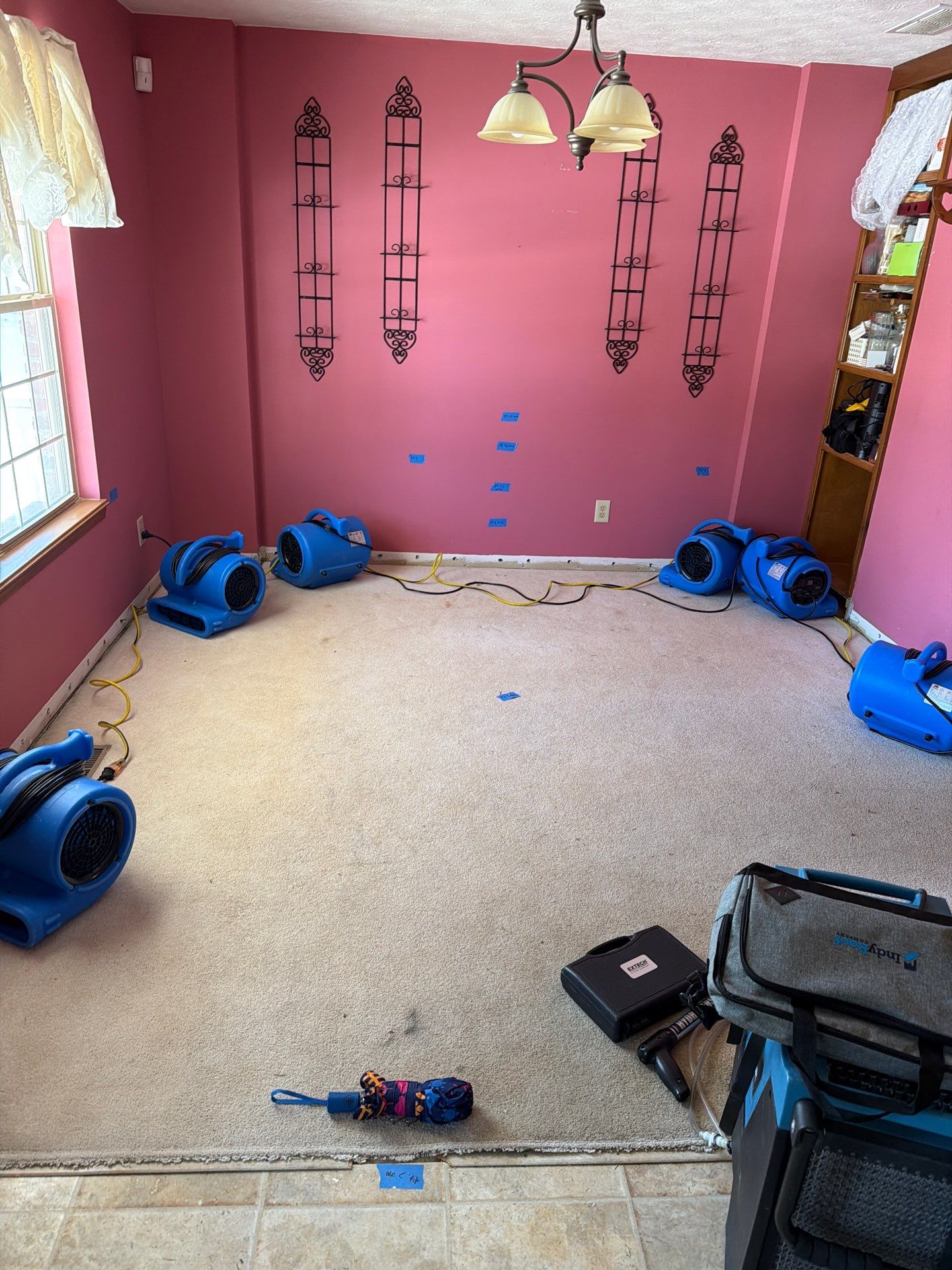
Box fans and ceiling fans move air around, but they do not remove moisture from the air. That is the part most DIY attempts get wrong. To actually dry a structure, you need three things working together: extraction, airflow, and dehumidification. Extraction means pulling standing water out with a wet vac or pump. Airflow means high velocity air movers, not household fans, pushing across wet surfaces. Dehumidification means a commercial unit that pulls 70 to 130 pints of water per day out of the air, far beyond what a basement dehumidifier from the hardware store can handle.
Without all three, moisture leaves the wet floor, enters the air, and then settles right back into your drywall, baseboards, and ceiling. You can rent some of this equipment locally, but the rental units are usually undersized for anything beyond a small spill.
There is also a monitoring piece most homeowners miss. Professionals take daily moisture readings on framing, subfloor, and drywall to confirm materials are actually drying rather than sitting at the same wet number day after day. Without those readings, you are guessing. A room can feel dry to the touch while the bottom plate of a wall is still saturated, and that hidden moisture is what feeds mold weeks later.
How do I know if the water reached places I cannot see?
This is where DIY drying breaks down most often. Water follows gravity and capillary action. It runs along the top of a subfloor, soaks into the bottom edge of drywall, travels under tile, and pools in wall cavities. Your eyes and your hands cannot detect this. Moisture meters and thermal imaging cameras can.
If your floor felt squishy, if you saw water run toward a wall, if a ceiling was involved, or if the leak went on for more than an hour before you stopped it, assume hidden moisture is present. The guide on signs of hidden water damage covers what to look for in the days and weeks after.
Two story homes in Springmill Villages add another layer of complication. Water from an upstairs bathroom or laundry room can travel down inside wall cavities and saturate the ceiling below, the top plate of the wall, and insulation that you would never think to check. A small upstairs leak can become a large downstairs problem within a single afternoon.
What does it cost to bring in professionals if I cannot finish the job?
Most residential drying jobs in Springmill Villages fall between $1,500 and $5,500 depending on the size of the area, the category of water, and whether materials like drywall or flooring need to be removed. Insurance typically covers sudden and accidental water damage, though long term leaks are often excluded. If you want a fuller picture before you call, the breakdown on water damage restoration cost on our blog lays out the line items most homeowners see on their invoice.
What should I do right now while I decide?
Shut off the water source if you have not already. Move furniture and belongings off wet flooring. Pull up area rugs. Lift the skirts of upholstered furniture off carpet by sliding foil or wood blocks underneath. Open windows if outdoor humidity is lower than indoor humidity. Document everything with photos and video before you move or throw anything away. That documentation matters if you end up filing a claim.
Do not run the HVAC if you suspect contaminated water or visible mold growth, since that will spread spores through every room. Do not lift wet carpet on your own if it covers more than a small area, since the padding underneath is heavy and usually beyond saving. Keep a written log of what you find and when, including the time the leak started, the time you shut it off, and any readings from a moisture meter if you own one. That timeline helps both your adjuster and any restoration crew that walks the job later.
How long do I have before mold becomes a problem?
The window is shorter than most people think. Mold can begin colonizing wet organic materials like drywall, wood, and carpet padding within 24 to 48 hours under the right temperature and humidity. That is the entire reason we treat water losses as emergencies. If you have been running fans for two days and things still feel damp, you are already inside the mold growth window. The piece on how fast mold grows after water damage walks through this timeline in more detail.
You will not always see mold right away. It often starts behind baseboards, under flooring, or inside wall cavities where airflow is limited and moisture lingers. By the time it is visible on the surface, the colony behind the wall is usually much larger.
What are the warning signs I should stop DIY and call for help?
Stop and call a professional if any of these apply. The water came from a toilet, sewer line, or outside floodwater. The affected area is larger than a single small room. Water touched drywall, insulation, or a subfloor. You smell a musty odor within 48 hours of the event. The home has hardwood floors that are now cupping or buckling. Anyone in the home has asthma, allergies, or a compromised immune system.
Calling does not commit you to a full restoration. At Springmill Villages Water Restoration, the assessment is free, and if we walk in and see that you have already handled it correctly, we will tell you directly. We would rather give you peace of mind than sell you work you do not need. When dispatch is needed, our Springmill Villages crews aim to be on site in most cases within 2 hours of your call.