Water Damage Cleanup for Springmill Villages
When water is spreading through your Springmill Villages home, Springmill Villages Water Restoration delivers fast, around the clock emergency response to extract, dry, and stabilize the damage before it gets worse. IICRC certified crews handle the full job from mitigation through reconstruction, and we coordinate directly with your insurance carrier.
If we're busy helping someone else and miss your call, we'll call you back within 15 minutes.


Springmill Villages Water Restoration delivers emergency water damage cleanup across Springmill Villages and surrounding IN communities: same day water removal, verified structural drying, sewage and storm cleanup, and insurance claim documentation. Crews answer 24/7 at (765) 703-7292.
- Services: water damage restoration, basement flooding, sewage cleanup, storm damage
- Service area: Springmill Villages, Hamilton County, IN and surrounding areas
- Response time: Same day for Springmill Villages inquiries; 24/7 emergency service available
- Licensed and insured (License #RC21100059)
- Serving Springmill Villages, IN since 2018
Schedule Your Free Damage Assessment
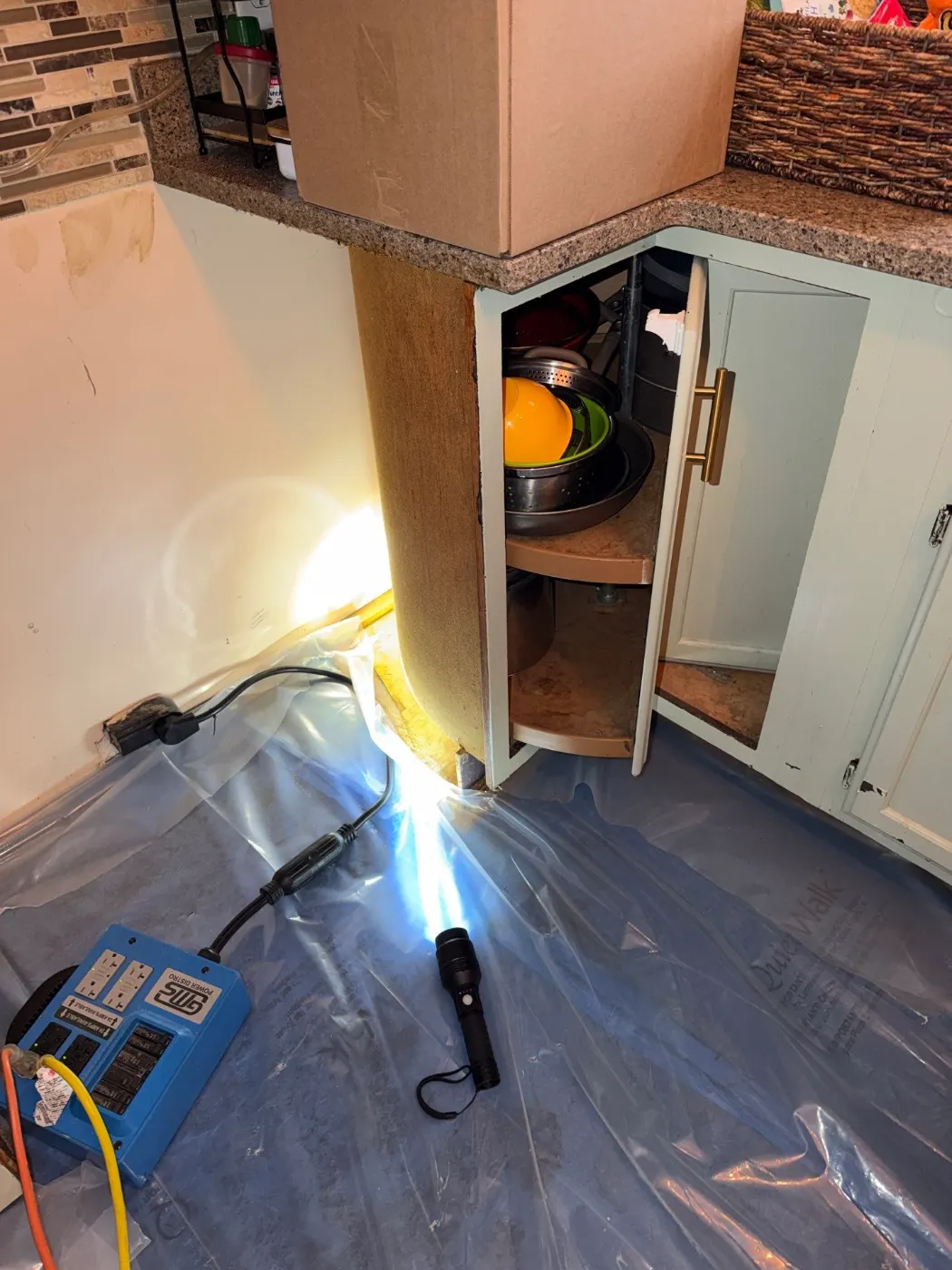
An inspection at a Springmill Villages home is a room by room walkthrough, not a glance and a quote. We map walls with non penetrating meters at multiple heights, check baseboards and trim, pull subfloor readings, look behind cabinets and appliances, inspect under sinks, around water heaters and washing machines, and walk the basement perimeter and slab joints where finished basements meet exterior walls. Thermal imaging cameras locate hidden cold spots that indicate trapped moisture, and a penetrating meter confirms the actual moisture content of the material. Ambient humidity gets logged with a hygrometer. The reason for this level of detail is simple: the most expensive problem in water restoration is moisture you missed, because that is the moisture that grows mold weeks later. Thorough mapping at the start is what protects Springmill Villages homeowners from a second call.
I agree to be contacted by Springmill Villages Water Restoration regarding my inquiry.
Springmill Villages homes range from established neighborhoods with mature trees and older plumbing to newer subdivisions still figuring out their building-grade systems. Water emergencies show up in both. Springmill Villages Water Restoration responds to Springmill Villages water damage with the same IICRC-certified crews regardless of neighborhood, age of home, or category of water.
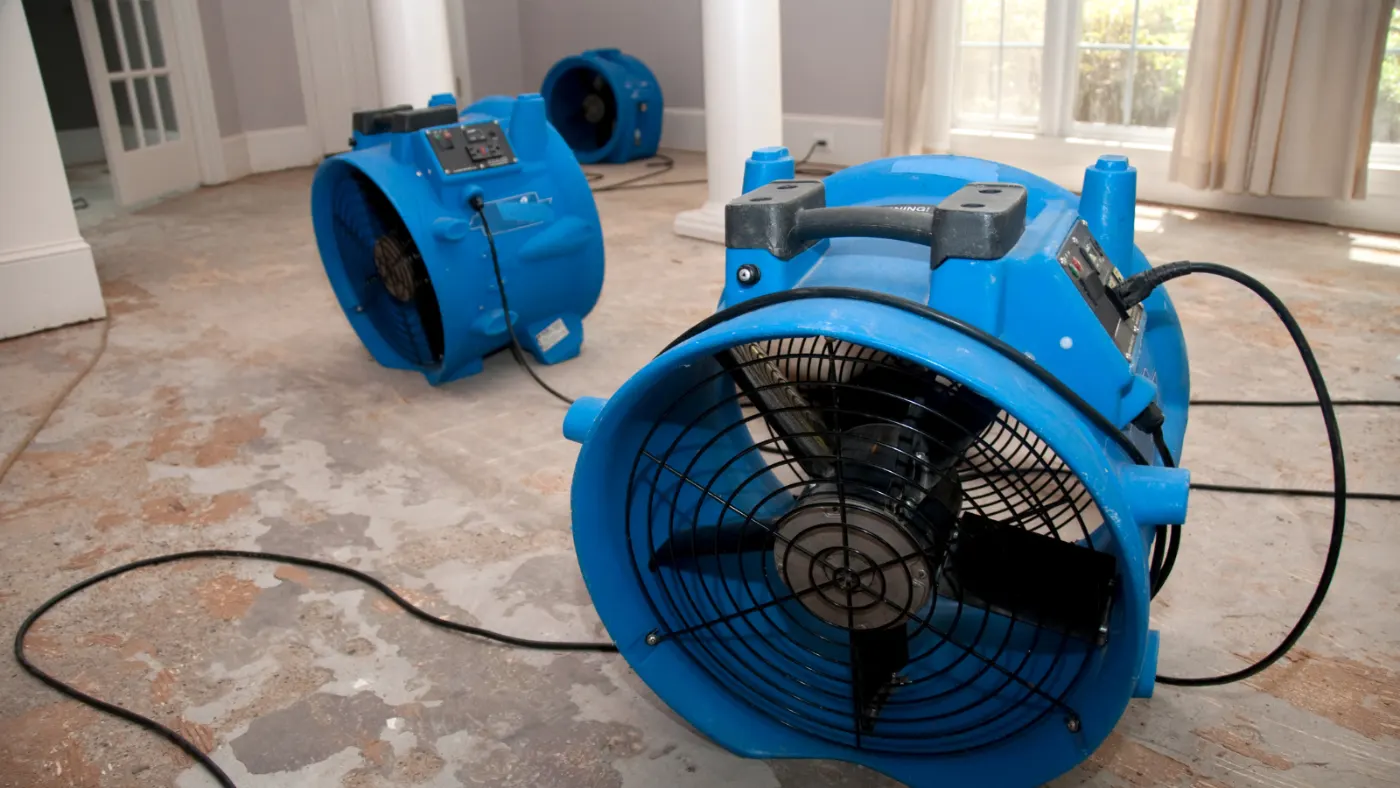
Emergency water removal is the sprint; structural drying is the marathon. The best Springmill Villages restoration work pulls the bulk water in hours, then places air movers and dehumidification to chase moisture out of studs, subfloor, and cavities over the following days, monitored and documented throughout.
Free estimates on water damage restoration across Springmill Villages come with something rarer: the honest version. If it's small enough to handle yourself, you'll hear that. If it's not, you'll see exactly why, in readings and photos.
Payment Options That Work for You
Your Springmill Villages Water Restoration project lead will walk you through every financing option during the assessment, and every term is in writing.
Pay for your project at a later time, but lock in today's pricing. Ideal for homeowners waiting on insurance settlements.
- No payments for 12 months
- No interest if paid in full
- Lock in current pricing today
Divide your project cost equally across 12 months with zero interest. Most homeowners choose this option for predictable budgeting.
- Equal monthly payments
- 0% interest for 12 months
- Simple, predictable budgeting
Spread your investment over up to 20 years with fixed equal payments. The right choice for larger projects or homeowners who prefer lower monthly amounts.
- Up to 20-year terms available
- Fixed equal payments
- Ideal for larger restoration projects
Subject to credit approval. Ask your project lead for current terms and promotions.
From Inspection to Final Walkthrough
Water damage looks different in every house, so each job starts with an inspection and a written plan.
Water Damage Restoration in Springmill Villages
Serving Springmill Villages: full scope residential water damage restoration covering extraction, structural drying, moisture verification, and reconstruction of affected areas. Work performed to IICRC S500 standard with documented readings throughout.
Learn moreBasement Flooding in Springmill Villages
For Springmill Villages addresses, emergency extraction and drying for flooded basements, including sump pump failure events, foundation seepage, and storm driven groundwater intrusion. Includes affected drywall, insulation, and flooring restoration.
Learn moreSewage Cleanup in Springmill Villages
Serving Springmill Villages: category 3 black water cleanup for sewage backups and contaminated water events. Containment, removal of contaminated porous materials, antimicrobial treatment, and verified restoration per IICRC standards.
Learn moreStorm Damage in Springmill Villages
In Springmill Villages, water damage restoration following storm driven intrusion, including wind driven rain, hail damaged openings, and tree impact water entry. Drying, mold prevention, and full interior reconstruction.
Learn moreCommercial Water Restoration in Springmill Villages
For Springmill Villages addresses, commercial water damage response for offices, retail, and multi tenant buildings. Scaled extraction and drying equipment with phased work plans to minimize business interruption.
Learn moreCommercial Flood Damage Cleanup in Springmill Villages
For Springmill Villages addresses, large loss flood cleanup for commercial properties, including extraction of standing water, drying of structural systems, and coordination with property management and insurance.
Learn moreCommercial Sewage Cleanup in Springmill Villages
Serving Springmill Villages: commercial Category 3 sewage cleanup with containment, contaminated material removal, antimicrobial application, and verification before reopening affected areas.
Learn moreCommercial Mold Remediation in Springmill Villages
For Springmill Villages addresses, commercial mold remediation per IICRC S520 standard, including containment, HEPA filtration, removal of affected materials, and post remediation verification when warranted.
Learn moreCommercial Storm Damage in Springmill Villages
In Springmill Villages, commercial storm damage water restoration covering wind driven water intrusion, roof leak interior damage, and structural drying coordinated with ongoing business operations.
Learn more
Local Expertise, Real Results
Methodical work, documented readings, and a crew that stays through reconstruction is how trust gets built in Springmill Villages.
Springmill Villages Water Restoration has been the Springmill Villages water restoration call since 2018. Indiana licensed, IICRC trained, fully insured, with a typical 2 hour dispatch on emergencies and a documentation discipline built for insurance carriers. We do not run sales pitches. The reviews and the case files speak for themselves.
Springmill Villages Water Restoration serves Springmill Villages homeowners with full scope water damage restoration, covering Westfield, the surrounding Hamilton County communities, and neighboring areas like Carmel, Countryside, and Merrimac. Our crews are IICRC certified technicians, licensed and insured, working as experienced technicians rather than crew, so the team that arrives at your Springmill Villages home is accountable from the first walkthrough to the final punch list. Years of restoration work across Hamilton County means we know the housing stock, the soil behavior, and the failure patterns common in this part of Westfield. When you call, you reach a restoration company that treats the situation with the urgency it deserves.
Every Springmill Villages job runs to the IICRC S500 standard for water damage restoration, and any mold work follows the IICRC S520 standard. That means a structured sequence: moisture assessment with thermal imaging and penetrating meters to map where water has actually traveled, controlled extraction matched to the category of water present, structural drying with monitored air movement and dehumidification, antimicrobial application when conditions call for it, and verification readings before any reconstruction begins. The point of the standard is to catch hidden moisture before it becomes a mold problem 30 days later. We document readings as we go so the work is defensible to your adjuster and to you.
Our Promise
Three commitments to every Springmill Villages homeowner who calls Springmill Villages Water Restoration. First, fast emergency response, day or night, with a certified technician leading the crew that arrives. Second, IICRC certified work trained to the S500 standard for water and S520 for mold, so the methodology is consistent and defensible. Third, a free on site inspection with no obligation before any work begins, and if you have an active claim, we coordinate with your insurance carrier through the documentation and scope conversation.
What Springmill Villages Homeowners Get With Us
IICRC certified work, thorough moisture mapping, and documented scope conversations that keep Springmill Villages homeowners informed from the first walkthrough through the final walk through.
Fast Emergency Dispatch
Water damage in Springmill Villages does not wait for business hours, and neither do we. Our 24/7 emergency line connects you to dispatch any time, with crews and equipment ready to roll. Every hour without extraction expands the affected footprint, so priority response is the difference between a small loss and a full reconstruction.
IICRC S500 Certified Crews
Our technicians are IICRC certified and trained to the S500 standard for water damage restoration. In practice, that means category determination, moisture mapping, structural drying calculations, and verification readings are done by the book. You get work that holds up to your insurance adjuster's review and to the long term test of a dry home.
Mitigation Through Rebuild
One crew handles the full scope for Springmill Villages homes: extraction, drying, demolition where needed, then drywall, flooring, paint, and trim. No waiting weeks for a separate general contractor to pick up after dry out. The job moves from emergency to finished under one project manager and one schedule.
Insurance Coordination
We document the loss properly from the first walkthrough: photos, moisture readings, scope of damage, and the mitigation justification. That documentation goes to your insurance carrier so the claim moves cleanly. We work with most major insurance carriers and coordinate directly with your adjuster on scope conversations.
Real Jobs. Real Results.
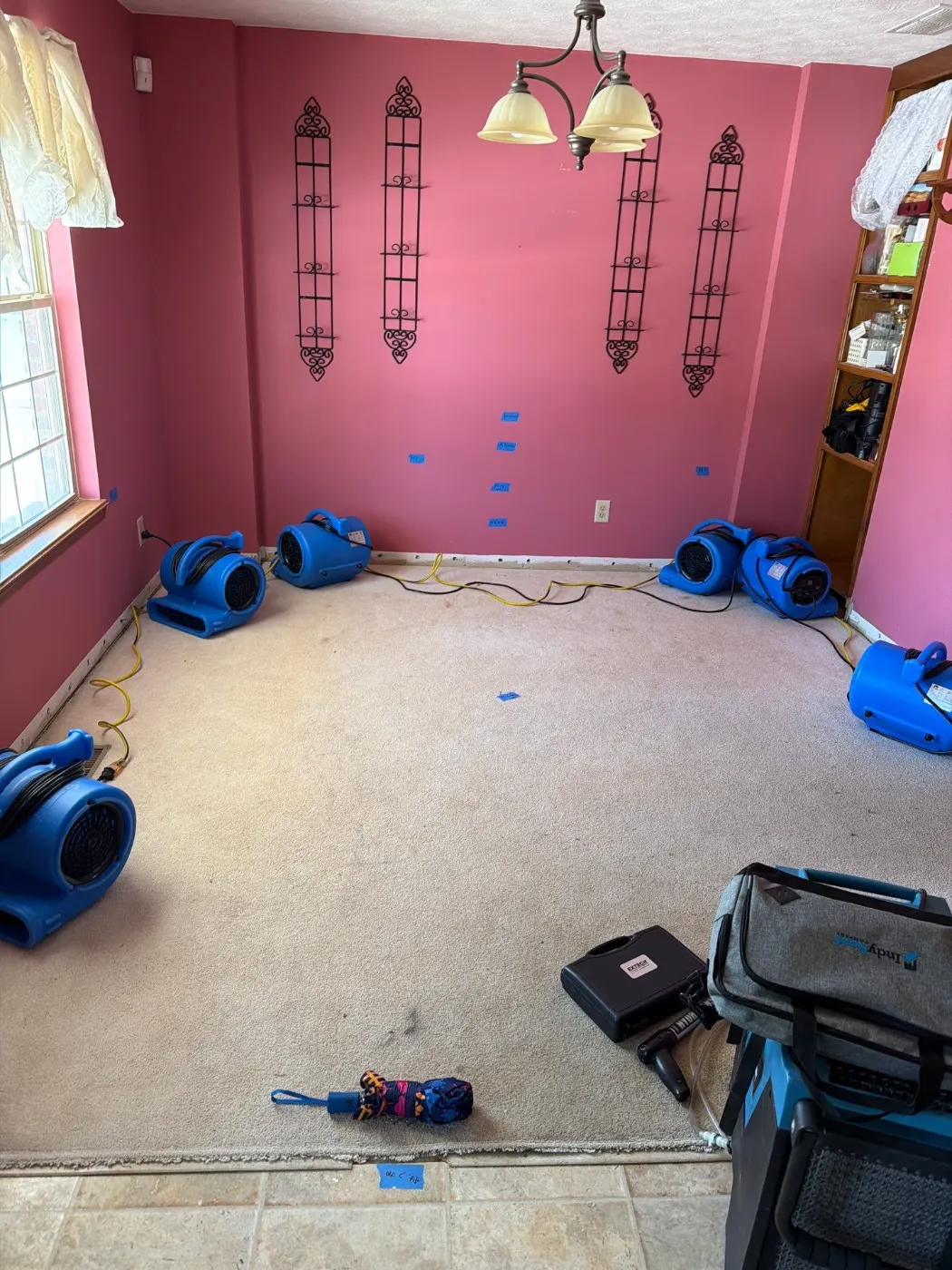
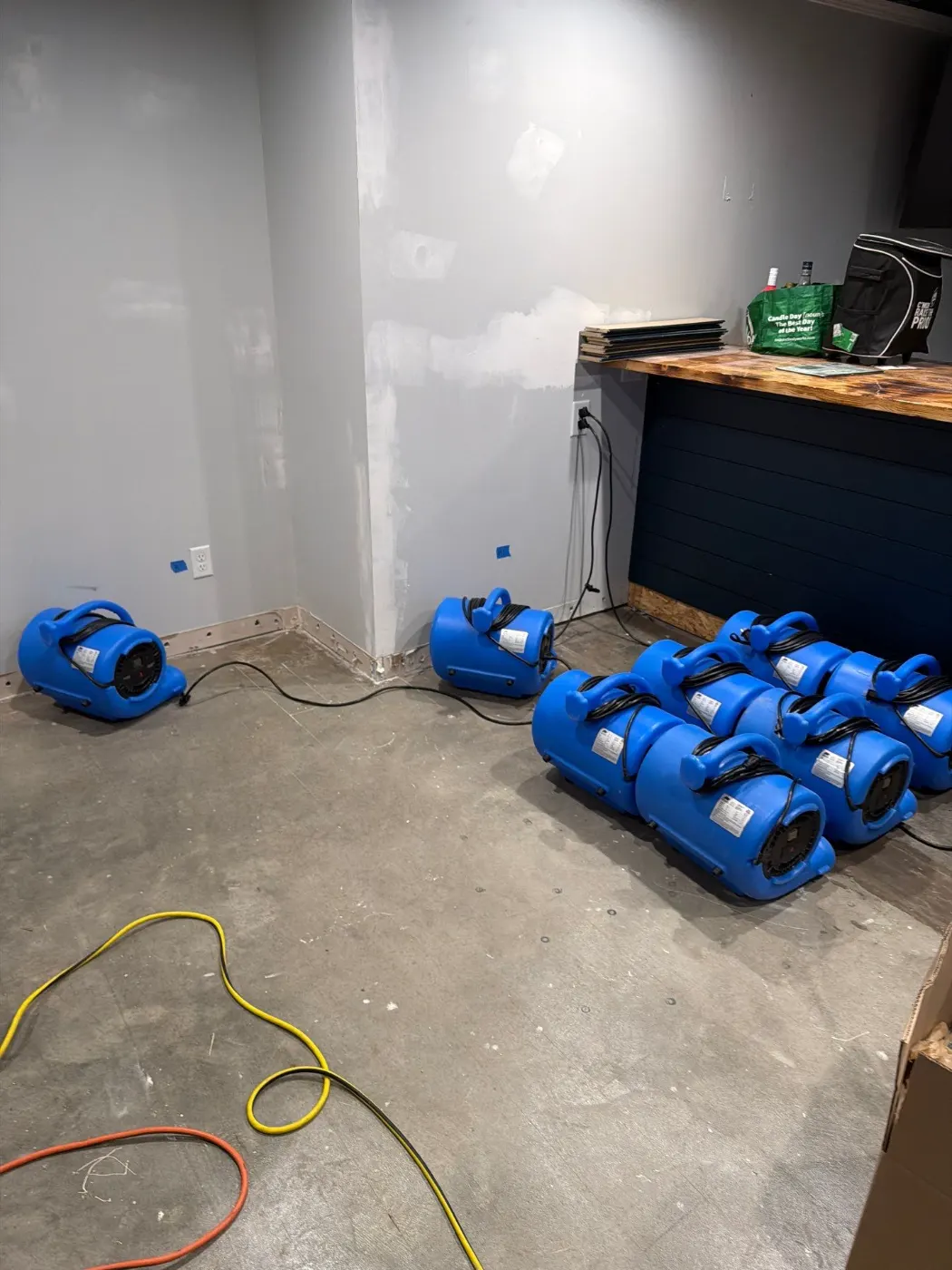
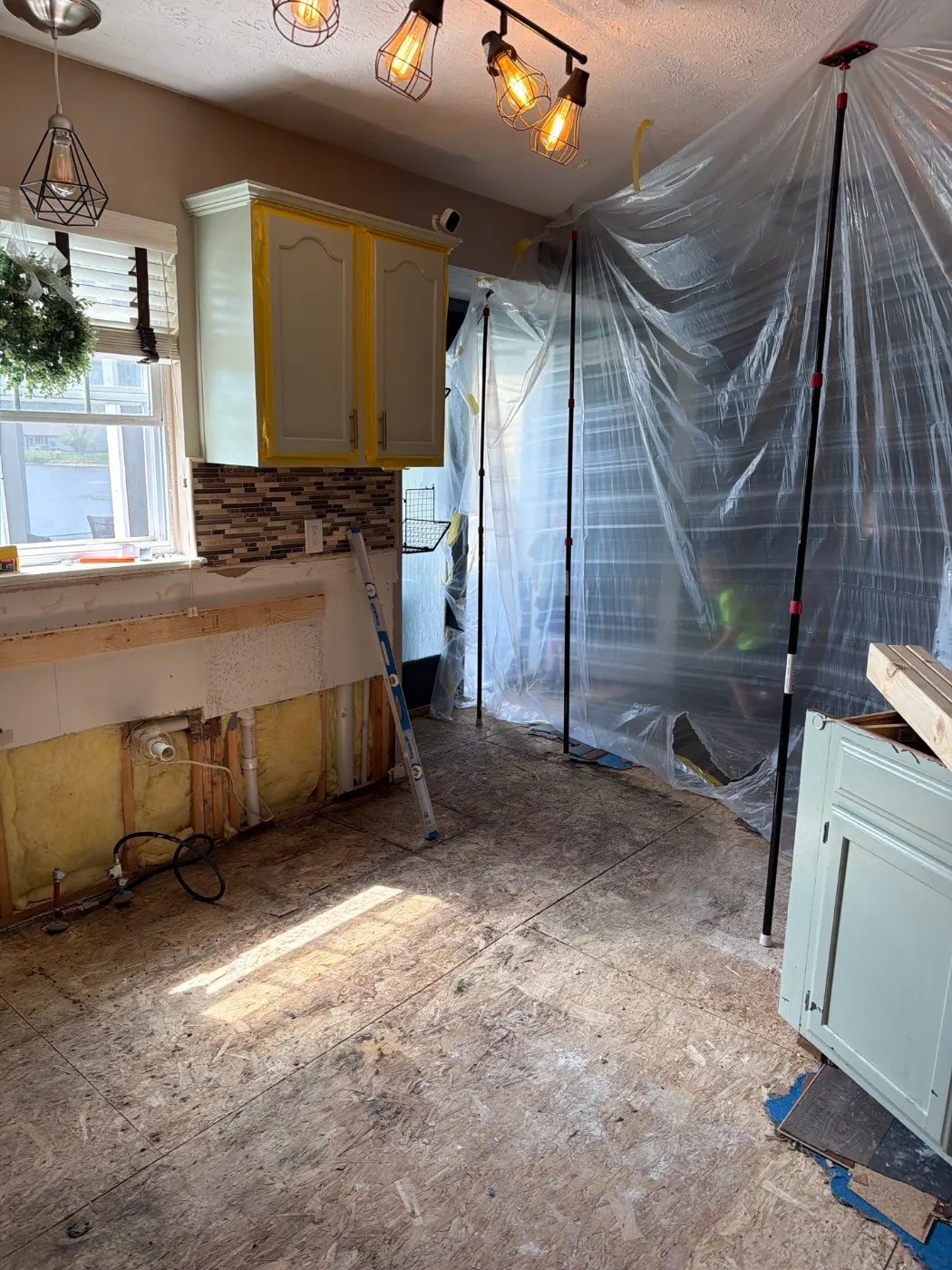
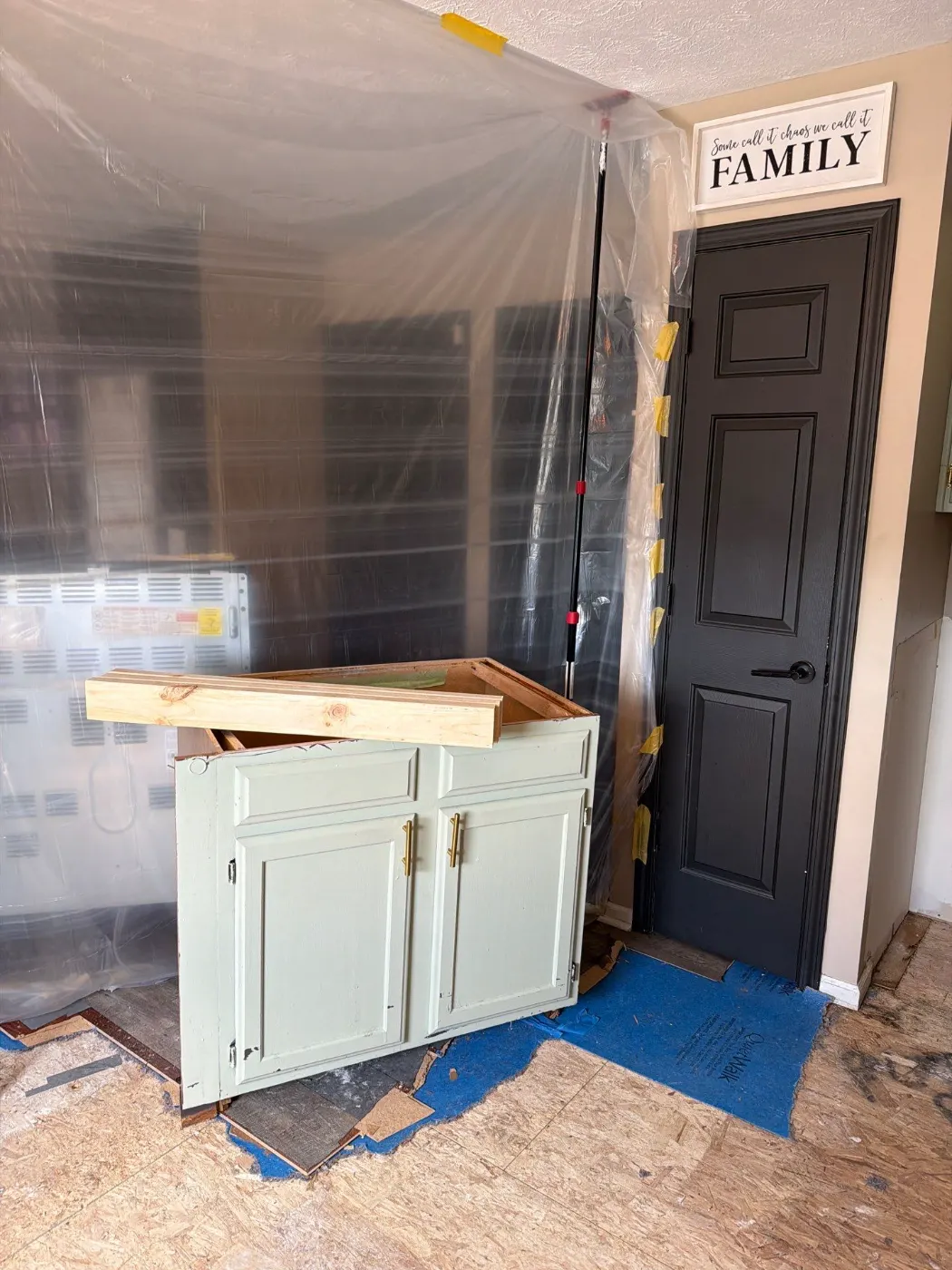
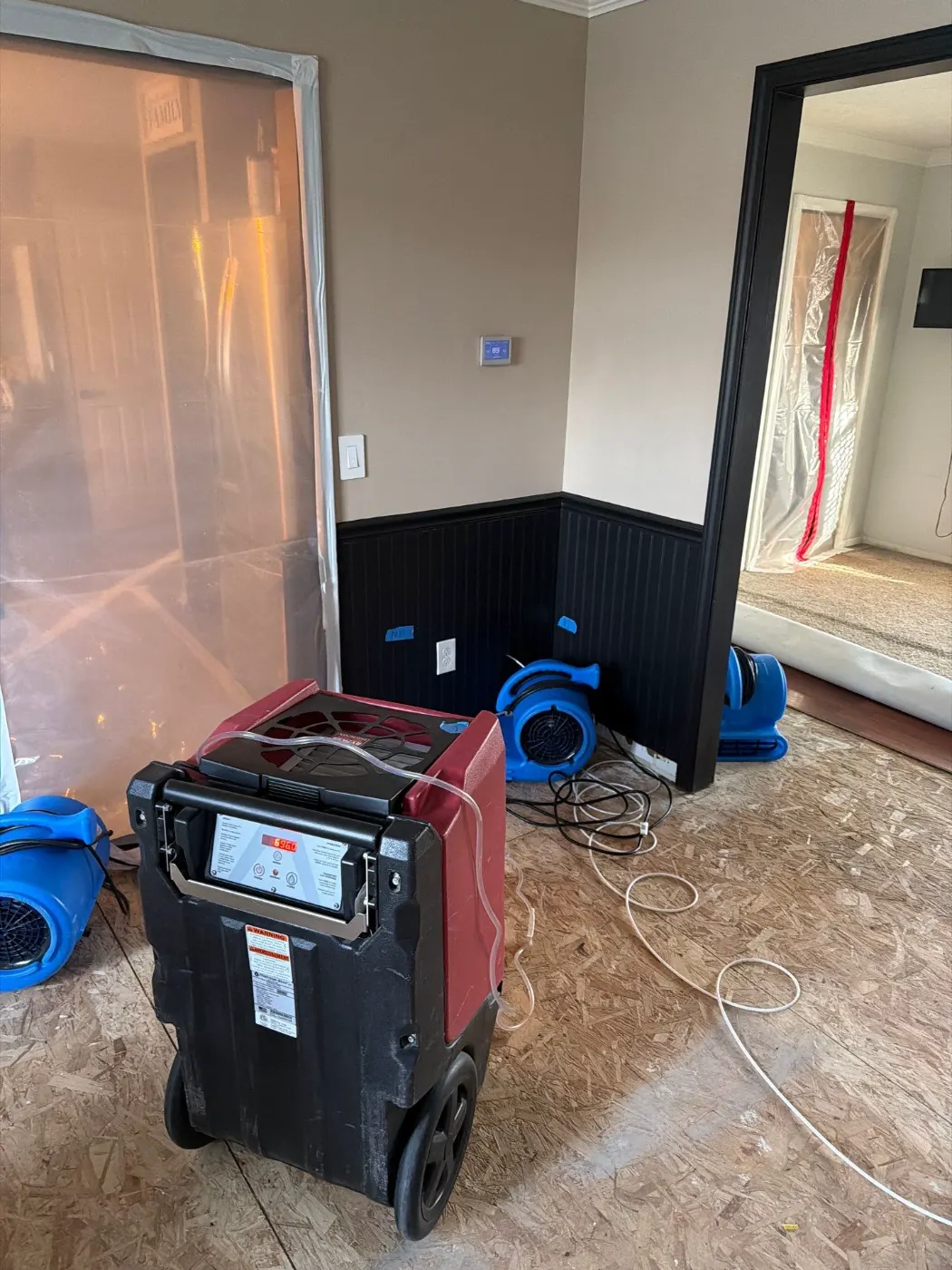
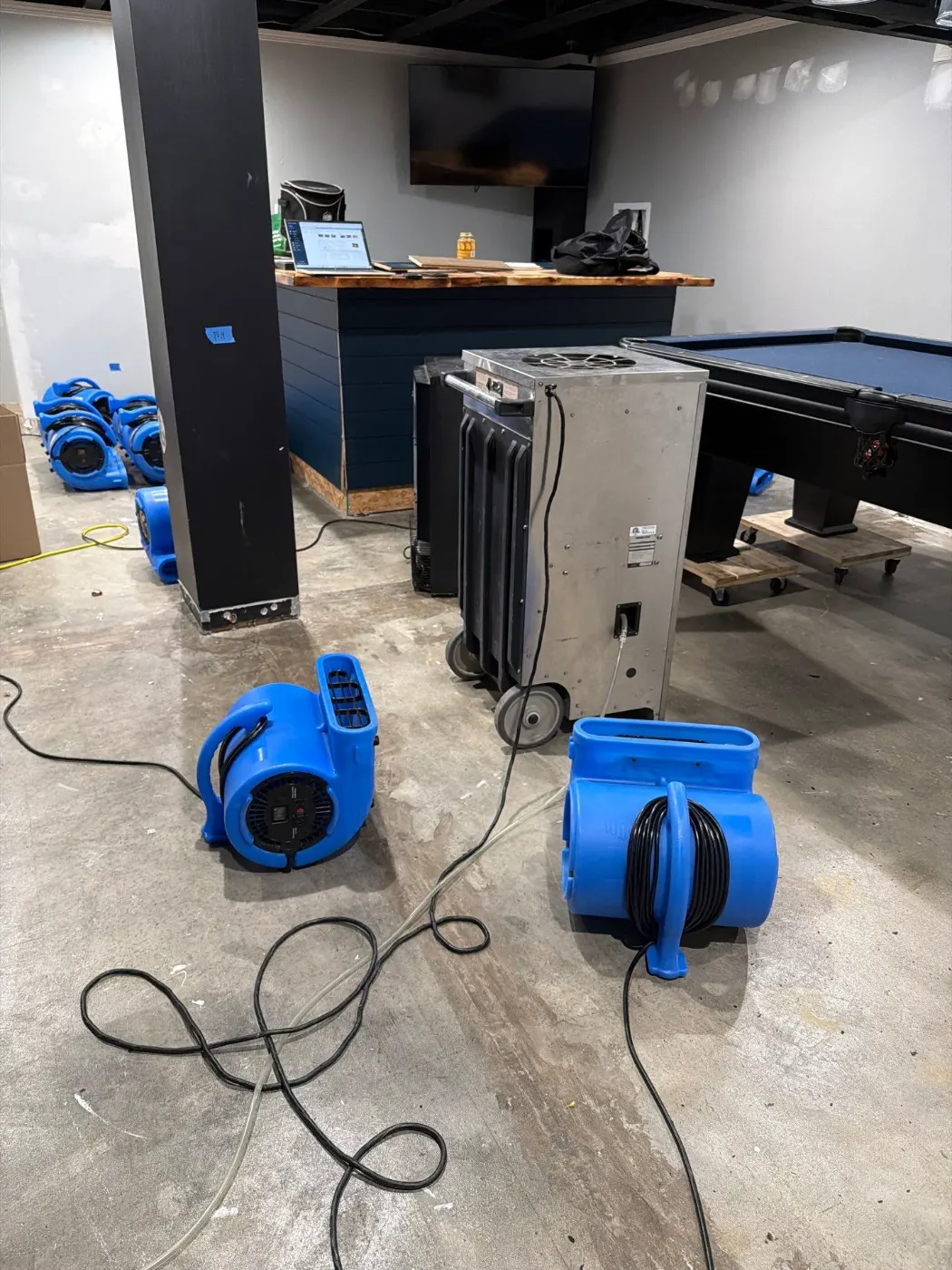
Recent water damage restoration work across Springmill Villages and Hamilton County, including basement extraction, Category 3 sewage cleanup, storm driven water intrusion, and full reconstruction projects.
Four Steps to a Dry Springmill Villages Home
The first phase at a Springmill Villages home is moisture assessment and Category determination. Our certified technician walks the property, uses thermal imaging and penetrating meters to map the actual extent of the water, and identifies the source, whether that is a broken copper supply line, an appliance failure, a sewage backup, or storm intrusion through a compromised opening. Water gets classified as Category 1, Category 2, or Category 3 per IICRC S500, and the scope of affected materials is documented before any drying equipment is positioned. This assessment typically takes one to two hours and sets the entire restoration plan.
The second phase is insurance documentation and coordination. Before mitigation begins, we capture photo and video of every affected area, log meter readings into a written moisture map, and prepare the scope of work in a format your insurance carrier expects. We contact your adjuster directly, walk through the proposed mitigation, and make sure the documented scope matches your coverage. Most Springmill Villages homeowners never have to translate restoration language for their carrier, we handle that conversation. The paperwork side of a claim is often where homeowners get stuck, so we take that off your plate.
The third phase is drying execution and reconstruction. Air movers and dehumidifiers are placed based on structural drying calculations for the affected square footage and the materials involved. Daily monitoring logs track the moisture content of walls, subfloors, and structural members until readings match the unaffected baseline. Demolition happens only where materials cannot be dried in place. Then reconstruction follows: drywall hung, taped, mudded, primed, painted; flooring replaced; trim and baseboards reinstalled. The Springmill Villages home goes from emergency back to lived in without a contractor handoff in the middle.
Rapid On Site Dispatch
Equipment is loaded on the truck before the call ends: extraction units, dehumidifiers, air movers, meters, and thermal cameras. A certified technician leads the crew. The goal is to get extraction started promptly because every hour of standing water expands the damage to subfloors, drywall, and insulation.
Category Determination
Water is classified by IICRC S500 protocol: Category 1 clean water from a supply line, Category 2 gray water from an appliance or toilet overflow without solids, Category 3 black water from sewage or floodwater. Meter readings are logged, and the written assessment drives the scope. Category drives everything that happens next.
Insurance Scope Partnership
We work with your insurance carrier, not around them. Scope is justified with documented readings and photo evidence, line items are explained, and we communicate with your adjuster directly through the claim. Invoicing stays transparent.
Drying to Verified Standard
Air movers and dehumidifiers run with daily monitoring. Materials are confirmed dry by meter readings matched to the unaffected baseline before any reconstruction starts. Sealing wet materials behind new drywall is what creates the mold call six weeks later, and we do not skip the verification step.
Common Springmill Villages Water Emergencies
Sink Drain and P-Trap Leaks
Under a kitchen or bath sink the joints are hand tight, the trap collects everything, and a slip nut backed off a quarter turn drips on every use. The cabinet floor swells, the base panel delaminates, and the wall behind it stays damp.
Foundation and Groundwater Intrusion
After heavy Hamilton County rains, groundwater pressure rises around foundations. Springmill Villages homes with compromised foundation seals or aging waterproofing see seepage and intrusion into basements.
Water Heater Tank Failure
Rust at the base of the tank or a damp ring on the slab is the warning most people walk past. When the shell finally opens, the supply keeps feeding it until somebody closes the cold inlet valve, which is why we ask where that valve is on the first phone call.
HVAC Condensate Line and Pan
An air conditioner pulls a real volume of water out of the air on a humid afternoon, and all of it is supposed to leave through the condensate line. Block that line with algae and the pan overflows, and an attic air handler puts it straight into the ceiling below.
Tub and Shower Pan Leaks
Tub surrounds leak at the spout penetration, at the valve escutcheon, and where the deck meets the wall. Any of the three puts water behind the surround, soaking framing and subfloor without ever running across the bathroom floor.
Sump Pump Failure
The single most common call we get from Springmill Villages homeowners. Power outage during a storm, pump motor burns out, or the float switch fails. By the time you notice, the basement has 2 to 6 inches of water.
The First Hour After Water Gets Into Your Springmill Villages Home
When water shows up in your Springmill Villages home, shut it off at the main and start moving things off wet floors, since every minute it sits lets it spread a little farther. The list below walks through the first hour in order.
1. Shut off the water at the main
If the water is coming from a pipe or an appliance, turn the main shutoff valve clockwise until it stops. In most houses it sits where the water line comes in, often on a basement wall facing the street or near the water heater.
2. Unplug what you can reach safely
If a lamp or a space heater is plugged in near the water and the floor around it is still dry, unplug it and carry it to a dry room. Leave anything that's sitting in water exactly where it is for the crew.
3. Protect yourself first
If you have to step into wet areas, wear rubber boots and gloves. Take the basement stairs slowly if they're wet, and leave the cleanup of any dirty water to the crew.
4. Clear a path for the crew
Our crew will need to reach the wet walls and floors, so move small items out of the affected rooms when it's safe to do it. Leave heavy furniture where it is until the crew arrives.
5. Pull up rugs and mats
Wet area rugs and bath mats hold water against the floor. Roll them up and move them to a garage or a dry room, and set any furniture that stays behind on foil squares to keep stains off the carpet.
6. Our crew takes the photos
Our crew takes the damage photos when we arrive, so you can spend the first hour on the steps on this list. We photograph each wet room before anything moves, and those pictures go into the photo report you keep.
7. Let the air reach wet spots
In rooms with clean water, open closet and cabinet doors so air reaches the wet spots. On a hot, sticky day, keep the windows closed and leave the air conditioning on, since it pulls moisture out of the air.
8. Call us and describe what you see
When you call, tell us where the water seems to be coming from and which rooms it reached. Those two details help the crew bring the right equipment on the first trip to your Springmill Villages home.
If you only get through the first two steps before help arrives, that's fine, since the water source and your safety come first. Call us when you're ready and we'll take it from there.
Three Simple Steps
Whether the water came from a pipe or a storm, the job moves through these same steps.
Step One: The Call
The first day decides what the invoice looks like. The equipment list is the same whether the loss is small or whole home.
Inspection & Evidence
Suspect cavities get opened only after the meters justify it. We handle the back end paperwork so you handle your household.
Prove It Dry
Daily readings track progress until dry standard, typically 3 to 5 days here. Sanitizing follows extraction on gray and black water losses.
How the Photo Report Helps You Decide What Comes Next in Springmill Villages
The photo report is the record of your water loss. Our crew photographs every affected room and logs moisture readings as the work goes. Then we walk you through what we found, so you understand your home before you make any decisions.
What caused it
Finding the cause comes first, because drying a room does little good if water keeps coming in. The report names the cause in plain words and shows it in photos, so you have a record of it later.
How far the water traveled
Water moves under flooring and up into drywall farther than it looks from the doorway. The crew checks walls and floors with moisture meters, and the report marks which areas read wet and which read dry.
Photos of every affected room
The crew photographs each affected room before anything is moved or removed, then again as the work moves along. You'll see the same corner of the same room on the first day and on the last.
Saving what can be saved
Drying in place is usually less disruptive than tearing out and replacing, and the readings show when it's possible. The report notes what the crew is drying in place and what it plans to remove, with photos of both.
Updates as the work goes
Drying takes several days in most homes, and the report grows the whole time. New readings and photos get added on each visit, so you always know where things stand in each room.
Seeing it for yourself
The point of the report is that you can see the damage for yourself. We show you the same photos and readings the crew used, and you can ask about any of them before the work goes further.
What to do with it next
With the report in hand, you can make your own decisions about the repair. We document damage with a photo report and walk you through what we found, so you can decide with your insurance company after you check your own policy.
Want to know what the crew will capture in your Springmill Villages home? Ask when you call, and we'll describe the photo report before anyone arrives.
Questions to Ask a Water Damage Company in Springmill Villages
Use these questions with any water damage company you call in Springmill Villages.
What happens if you find mold?
Ask how mold behind walls or under floors gets handled, and whether that work is priced apart from the drying.
Who handles repairs after drying?
Ask who replaces drywall, flooring, paint and trim once the structure is dry, and whether one company can do both stages.
Who will be working in my home?
Ask whether the crew works for the company you called or for a subcontractor, and who's in charge on site each day.
How will you show me it's dry?
Ask for moisture readings on the first visit and the last one, so you can see the numbers reach dry standard.
Can I see an itemized estimate?
Ask for every line item in writing. Many insurers price water losses in Xactimate, so an estimate in that format is easier for an adjuster to review.
Does my policy require a certain company?
Ask your adjuster before you sign anything, and read the work authorization so you know what you're agreeing to.
Indiana Weather Drives Restoration Calls Year Round
Indiana weather drives a predictable rhythm of water damage calls across Springmill Villages: spring rain saturating clay soils and overwhelming sump pumps in finished basements, summer thunderstorms pushing wind driven rain through compromised openings, and winter freeze thaw cycles bursting uninsulated supply lines in garages and exterior walls.
Spring Saturation Flooding
Westfield sits on clay heavy soil that drains slowly, and spring storms can dump inches of rain in a single system. Saturated ground pushes hydrostatic pressure against basement walls and finds the path of least resistance through cove joints and foundation cracks. When sump pumps fail under that load, finished basements in Springmill Villages take on water fast. We extract, dry the structure, and document the loss for your carrier.
Winter Pipe Bursts
Central Indiana freeze thaw cycles swing temperatures across the 32 degree line repeatedly from January through March. Uninsulated pipe runs in garages, crawl spaces, and exterior walls are the common burst points. A burst supply line at 2 AM can release hundreds of gallons before the main is shut. Springmill Villages homeowners get fast extraction, structural drying, and full reconstruction once the plumber has stopped the source.
Severe Thunderstorms and Hail
Spring and summer storm systems along the SR-32 corridor have brought hail and heavy thunderstorm rain across Westfield, with documented severe weather in March 2024. Wind driven rain forces water through compromised openings, window seals, and storm damaged exterior penetrations. Once water gets into wall cavities and insulation, drying it out requires the right equipment and methodology. We handle the water side of the storm damage.
Summer Humidity and Mold
Indiana summers run humid, and finished basements and crawl spaces that hold ambient moisture become mold friendly environments quickly. Mold can begin colonizing damp materials within 24 to 48 hours when conditions are right. After any water event, controlling humidity during the drying phase is what prevents the secondary problem. We monitor ambient conditions and run dehumidification until readings stabilize.
Where Our Trucks Go in Springmill Villages
Open a neighborhood for a quick look at the homes in that part of Springmill Villages and the water risks that come with them.
Where we respond near Springmill Villages
These are the towns near Springmill Villages where our crews answer water damage calls day and night.
Water Damage Risk in Springmill Villages
What Springmill Villages homes tend to need after water damage.
About Springmill Villages Homes
Springmill Villages in Westfield, Indiana is predominantly composed of single family detached homes built around 1994, placing the community squarely in the mid-1990s suburban construction era. Homes of this vintage were typically plumbed with copper supply lines, though some builders in the late 1990s began transitioning to early PEX installations, making aging copper joints and solder connections a known plumbing failure risk. The neighborhood features predominantly large single family detached homes, many with four or more bedrooms, consistent with the 1990s Indianapolis suburban building pattern that commonly included full or partial basements and attached garages. The relatively flat terrain of Westfield means drainage gradients are modest, making sump pump installations common in finished basements and crawl space moisture management a persistent concern.
Where We Work in Springmill Villages
We cover homeowners across Springmill Villages near Shamrock Springs Elementary School (747 W 161st St), Maple Glen Elementary School (17171 Ditch Rd), Westfield Washington Public Library (333 W Hoover St), Grand Park Sports Campus, Spring Mill Road, Ditch Road, Indiana Route 32 (SR-32), Clay Terrace outdoor shopping center.
Surrounding Areas We Serve
Our crew also covers Countryside (northeast), Merrimac (southwest), Springmill Villas & Towns, Springmill Park, Westfield (city center), Carmel.
Recent Weather Patterns
In March 2024, NWS-documented severe storms brought hail ranging from 1.00 to 1.75 inches near Westfield along the SR-32 and Ditch Road corridor, with heavy thunderstorm rainfall creating localized flooding pressure across central Indiana. The broader central Indiana region experiences recurring severe weather patterns including spring and summer thunderstorm systems with heavy rain, hail driven window and door intrusion, and periodic freeze thaw cycles in winter that drive burst pipe and ice dam water damage claims.
What Our Crew Sees in Springmill Villages
Springmill Villages sits on Westfield's generally flat suburban terrain with clay heavy Indiana soils that limit percolation and increase surface saturation risk during heavy spring rains, making sump pump failure a primary water damage trigger in this neighborhood's finished basements. Homes built around 1994 are now 30+ years old, placing copper plumbing joints and original wax toilet seals well into their failure window, and older sewer laterals in this vintage of development are approaching the age range where root intrusion and joint separation become active concerns. Central Indiana's freeze thaw cycle,with temperatures regularly swinging across the 32°F threshold in January through March,puts uninsulated pipe runs in garages, crawl spaces, and exterior walls at elevated burst risk each winter season.
The Springmill Villages Area
Springmill Villages has approximately 706 residents according to US Census data, within the broader 46074 ZIP code which carries a median household income of approximately $126,724 and an average household income of $161,372, reflecting an upper middle class, family oriented community. Households in the area tend to be owner occupied, family sized (averaging 2.89 persons per household), and skew toward the mid-30s in median age, consistent with active families in large suburban homes.
The Work Behind a Dry Out in Springmill Villages
What a homeowner in Springmill Villages can expect at each stage of the job.
The emergency response phase starts the moment the crew rolls. On the truck: commercial water extraction equipment sized for the volume present, commercial dehumidifiers matched to the affected square footage, professional air movers, moisture meters, and thermal imaging cameras for hidden moisture mapping. Extraction begins promptly on arrival, and structural drying equipment is positioned the same day. Daily monitoring follows, with logged readings tracking progress against the dry standard. For the Springmill Villages homeowner, the work zone is contained with plastic protection on doorways and unaffected rooms, walkways are kept clear, and the technician explains what to expect day by day. This phase covers Category 1 losses like supply line breaks and Category 2 losses like appliance overflows, where the water itself is not biologically contaminated but the structure still needs proper drying to prevent secondary damage.
Specialized containment applies when the loss is Category 3 water (sewage backup, floodwater, long stagnant water with biological contamination) or when mold remediation is required under IICRC S520. The work area is sealed off with 6-mil plastic barriers from floor to ceiling, entry points are taped, and negative air machines pull contained air through HEPA filtration before exhausting outside the work zone. Technicians wear full PPE per S520 protocol: Tyvek suits, N95 or P100 respirators, nitrile gloves, and eye protection. Contaminated porous materials are cut out, bagged, and disposed of properly. Remaining structure gets antimicrobial application, and when warranted, post remediation verification through air sampling confirms the space is safe to rebuild. This is the phase where IICRC certification matters most. Shortcuts here cause the long term indoor air quality and health problems.
The reconstruction phase rebuilds what the loss took out. Scope typically includes drywall hung, taped, mudded, sanded, primed, and painted to match; flooring replaced (carpet and pad, vinyl plank, hardwood refinish, tile reset); trim and baseboards reinstalled or replaced; cabinetry repaired or replaced; doors rehung; and electrical and plumbing finish work coordinated with licensed trades. The homeowner works with one project manager from the initial call through the final walk through, with one schedule and one final invoice. The common alternative across the industry is a handoff to a separate general contractor after dry out, which creates two crews, two billing cycles, and weeks of gap time where the home sits in demolition. Springmill Villages Water Restoration runs the rebuild in continuity with the mitigation work.
Your Home During the Dry Out: What Springmill Villages Homeowners Should Know
The drying stage is the part of the job you live with, since the air movers and dehumidifiers stay in your home until the readings say the materials are dry. A few simple habits keep the drying on track and the house comfortable.
What each machine does
Air movers push air across wet floors and walls so the water evaporates, and dehumidifiers pull that moisture back out of the air. The two kinds of machines work as a pair, so both need to keep running.
Leave the settings to the crew
Most units have their own switch or a small control panel. The crew sets those for your rooms, so leave them as they are and let the crew make changes on their next visit.
Closed doors help
When the crew closes off a room, the equipment dries a smaller space faster. Keep those doors shut as much as you can, and pass through quickly when you need to get in.
The equipment uses a lot of power
Drying equipment draws a steady load, so the crew spreads it across different circuits. If a breaker trips, reset it once, and call us if it trips again so the crew can move a unit.
Safe paths through the house
Equipment and cords can turn a familiar hallway into a tripping spot, especially at night. Leave a light on along the path you use most, and keep small kids away from the units while they run.
A crew visit each day
Someone from the crew stops by each day to take readings and move the equipment where it's needed. Tell them about anything new you notice, like a musty smell or a soft spot in the floor.
Keeping moisture down
EPA puts it this way: the key to mold control is moisture control. In practice that means drying your home quickly and keeping the humidity down once the equipment is gone.
The last day of drying
On the final visit, the crew takes one more set of readings to confirm the wet areas are dry. Then the equipment comes out and the rooms are ready for any repairs they need.
The crew will walk you through the setup on the first day, and you can call us with questions until the last unit leaves your Springmill Villages home.
Water damage pricing in Springmill Villages
Mitigation ranges calibrated to the Springmill Villages market. Final pricing depends on water volume, materials affected, and IICRC Category.
Springmill Villages Water Restoration is powered by Indy Roof & Restoration
Indy Roof & Restoration runs this site and does the work booked through it. Springmill Villages sits in territory Indy Roof & Restoration has worked since 2018, from the main roads to the back streets. Indy Roof & Restoration has 2,380+ Google reviews from homeowners.
Licensed and insured · License #RC21100059
Their standing includes BBB A+ Rated · Owens Corning Preferred Contractor · Malarkey Certified Contractor. Media appearances include FOX59, WISH TV, and RTV6. Local roots show in things like Habitat for Humanity, Toys for Tots, the annual school supply backpack drive, and local youth sports and school programs across central Indiana.
The Questions That Come Up on Every Springmill Villages Job
The answers below cover what Springmill Villages homeowners ask about most after a leak or a flooded basement.
Expert Springmill Villages Restoration Crews Available Now
Water spreading through your Springmill Villages home right now means every hour matters, and Springmill Villages Water Restoration dispatches emergency crews day or night to extract and stabilize the damage. Free on site inspection, no obligation, and we coordinate directly with your insurance carrier on the claim.