Storm Damage in Springmill Villages, IN
Springmill Villages basements flooded after a power failure get pumped down and dried, with every room documented.
Springmill Villages Water Restoration provides Storm Damage in Springmill Villages, IN. 24/7 emergency response with IICRC certified crews, and we work with your insurance carrier on approved claims. Call (765) 703-7292 for immediate dispatch.
- Service: Storm Damage for Springmill Villages homeowners
- Service area: Springmill Villages, IN and surrounding areas
- Response time: Rapid emergency dispatch for Springmill Villages inquiries; crews available 24/7
- Licensed and insured (License #RC21100059)
- Serving Springmill Villages, IN since 2018
Storm Damage Cleanup in Springmill Villages
We'll dry out your home in Springmill Villages after storm water gets in through the roof or the basement.
Storms Here
Severe thunderstorms come through in spring and summer. Storms here can also bring large hail. If your insurance company asks for a storm date, NWS Indianapolis keeps a list of past events.
Where Storm Water Ends Up
With finished basements common here, a big storm can bring water in from below as well as through the roof. That makes it a basement flooding job too.
After a storm we can be anywhere in Springmill Villages, from Countryside to the roads around Indiana Route 32 and the Clay Terrace outdoor shopping center. We also handle storm damage in Carmel and Westfield.
Expert Storm Damage for Springmill Villages Homeowners
A wet ceiling cavity that nobody dries becomes a ceiling that's got to come down, and the gap between those two jobs is usually a few days. Water sits on top of the drywall, the paper facing lets go, and the fasteners start pulling through. Springmill Villages Water Restoration dispatches a crew to storm water calls in Springmill Villages, IN within 2 hours, measures what the assembly is holding, and dries what can still be saved before the material fails.
Aaron Christy founded the company behind Springmill Villages Water Restoration in 2018. On a storm job in Springmill Villages, the crew covers the opening, reads the materials and removes only what won't dry, then logs readings until the numbers say the house is dry. You get those readings and the photos in a file you keep, so the work is easy to follow later.
Readings happen every day the equipment is running. Technicians log moisture content at the same marked locations, compare it against the unaffected baseline from your own house, and move or add equipment wherever a zone is lagging behind the others. If it rains during the drying phase, the crew rechecks the stabilized area and the materials under it to confirm nothing's come back in.
Rain, insulation and drywall leave a lot to keep track of on a storm job, and Springmill Villages Water Restoration keeps it in one file for your Springmill Villages home. That file covers the entry point photos, the daily readings, why each material came out, the equipment log and the final readings. It's yours to keep, and you decide with your insurer what to do with it.
If there's water coming in through your roof or a wall in Springmill Villages right now, the useful next step is a phone call. Springmill Villages Water Restoration dispatches a crew at any hour to cover the opening and get extraction started. You'll get a moisture map that shows how far the water went.
Signs You Need Storm Damage Restoration
If you notice any of these in your Springmill Villages home, schedule a free inspection before the issue worsens.
Puddles along an exterior wall or standing water in a basement window well after heavy rain
Pooled water or wet insulation under the floor in a crawl space
White chalky residue on a basement foundation wall where water has been moving through it
Hardwood boards cupping near a patio door or garage entry
Basement floor drain gurgling or bubbling during a heavy downpour
A musty smell that comes back in the same room after every rain and fades in between
Ceiling texture cracked in a straight line that follows a joist or a roof truss
Stored boxes in a basement corner with damp bottom edges or water lines
Damp, earthy air when you open the attic hatch or pull the attic ladder down
A pin moisture meter reading far above the same wall in a dry room
How Springmill Villages Water Restoration Handles Storm Damage
We follow these steps in order on every Springmill Villages job.
Power and Safety Check
The crew looks for water near outlets and light fixtures and keeps affected circuits off. Sagging ceilings and slick floors get marked before anyone starts work, and wet electrical gear gets flagged for an electrician.
Moisture Mapping
Thermal imaging and penetrating meters cover every room under and beside the intrusion, plus baseline readings in unaffected areas of the same house. The map shows how far water tracked through framing and insulation, and it's what decides which surfaces get opened.
Contents Protection
Furniture legs get blocked off wet flooring and small items move out of the water's reach, with photos taken of anything that shifts. Rugs and boxes in a flooded basement come up off the floor before extraction starts.
Daily Monitoring
A technician returns every 24 hours while equipment runs, logs moisture content at the same marked locations, and repositions equipment wherever a zone's lagging. Rain during the drying phase triggers a recheck of the stabilized opening and of the materials sitting under it.
Final Walkthrough
Once the clearance readings are documented, the equipment comes out and the technician walks the rooms with you. The removed materials and the photo file get reviewed together so you know what repairs come next.
Storm Damage in Springmill Villages
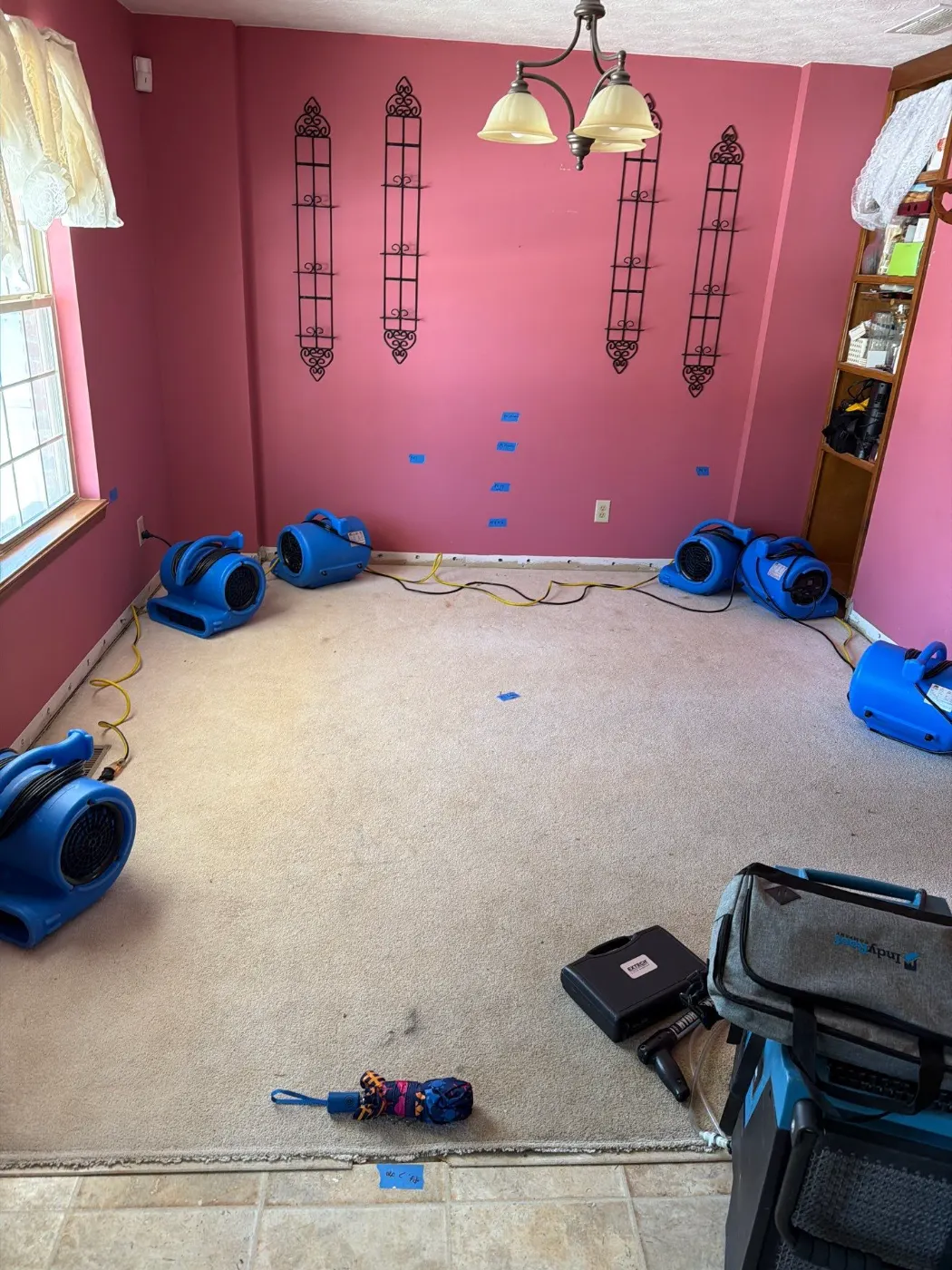
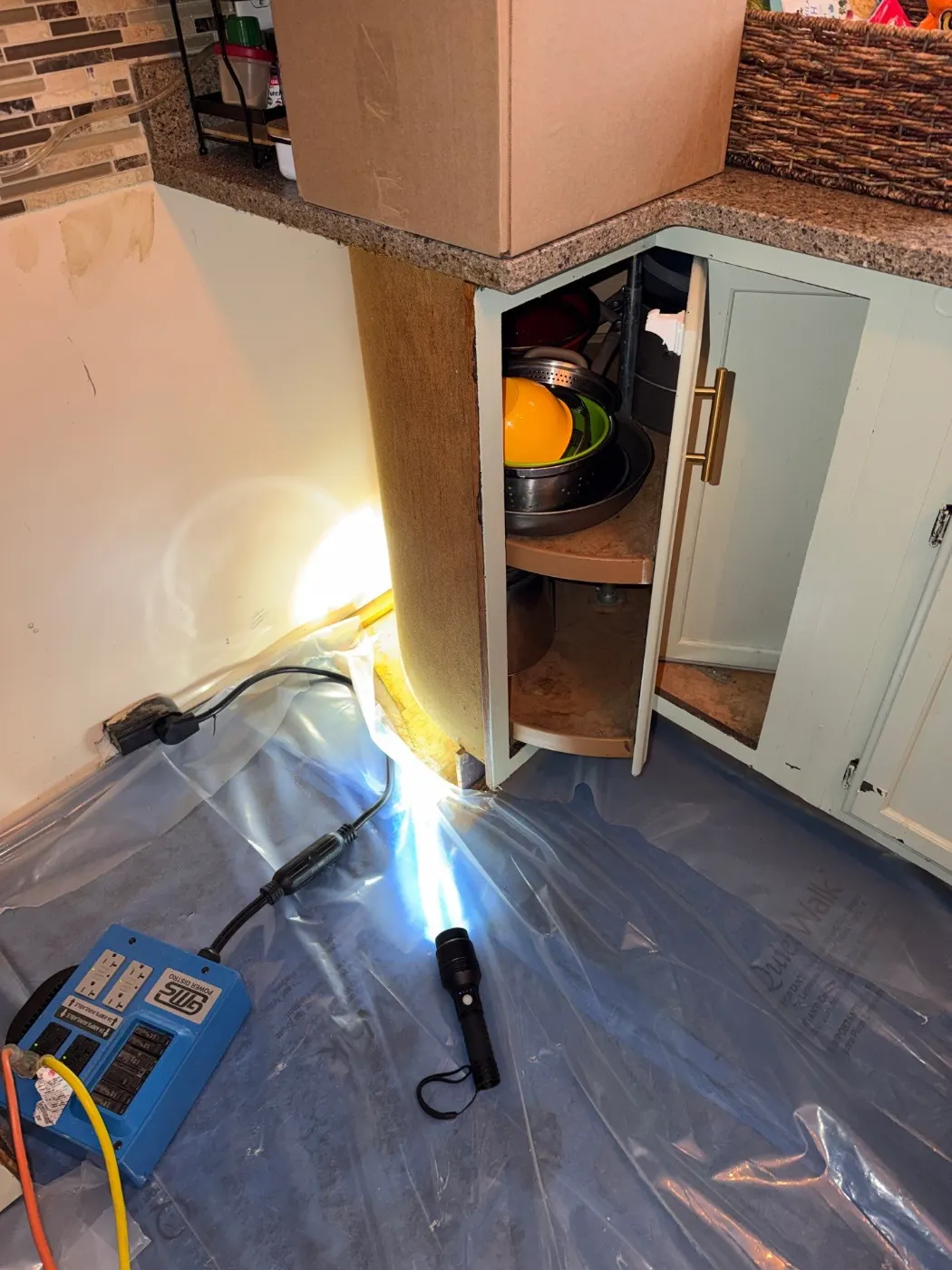
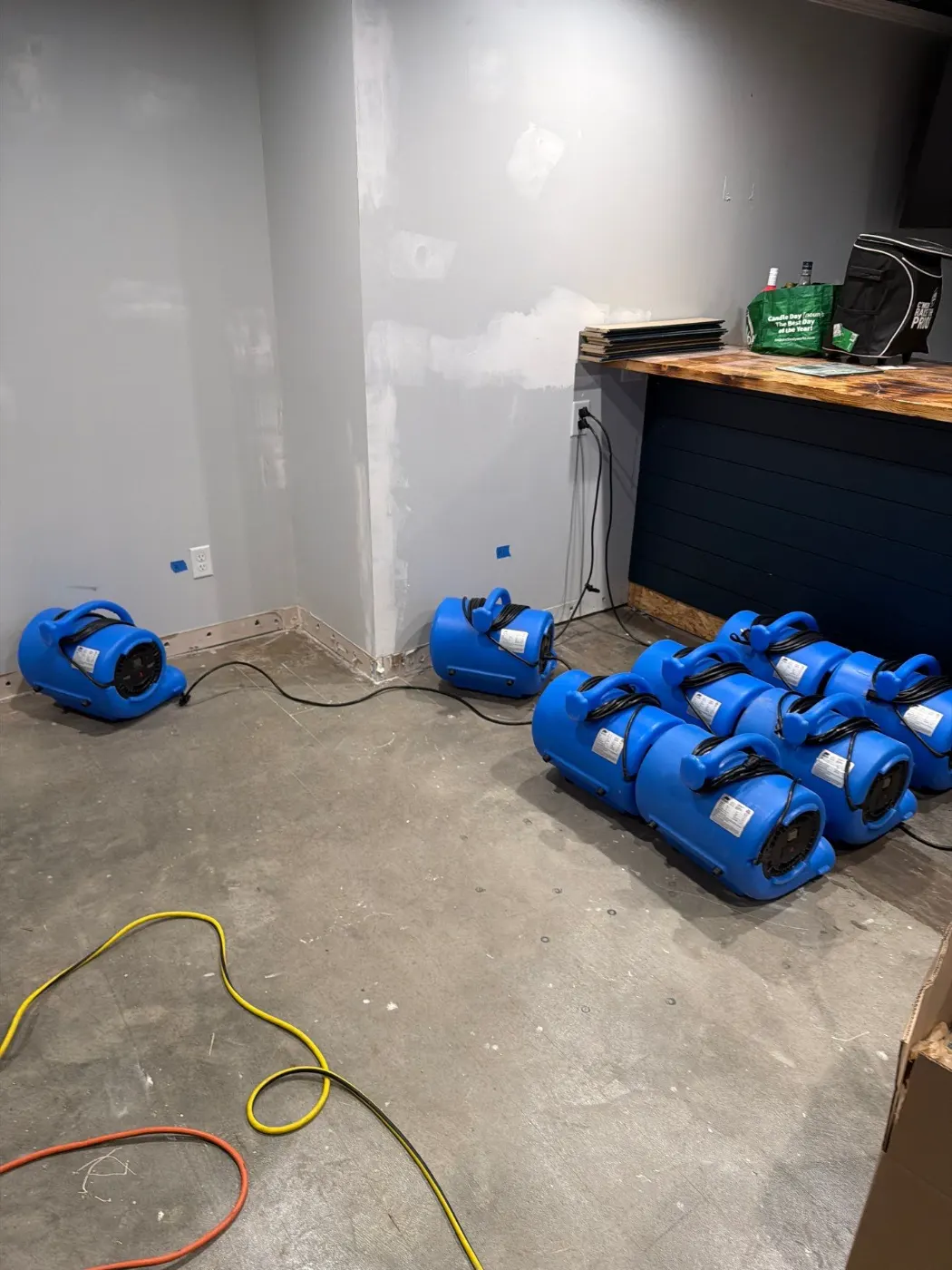
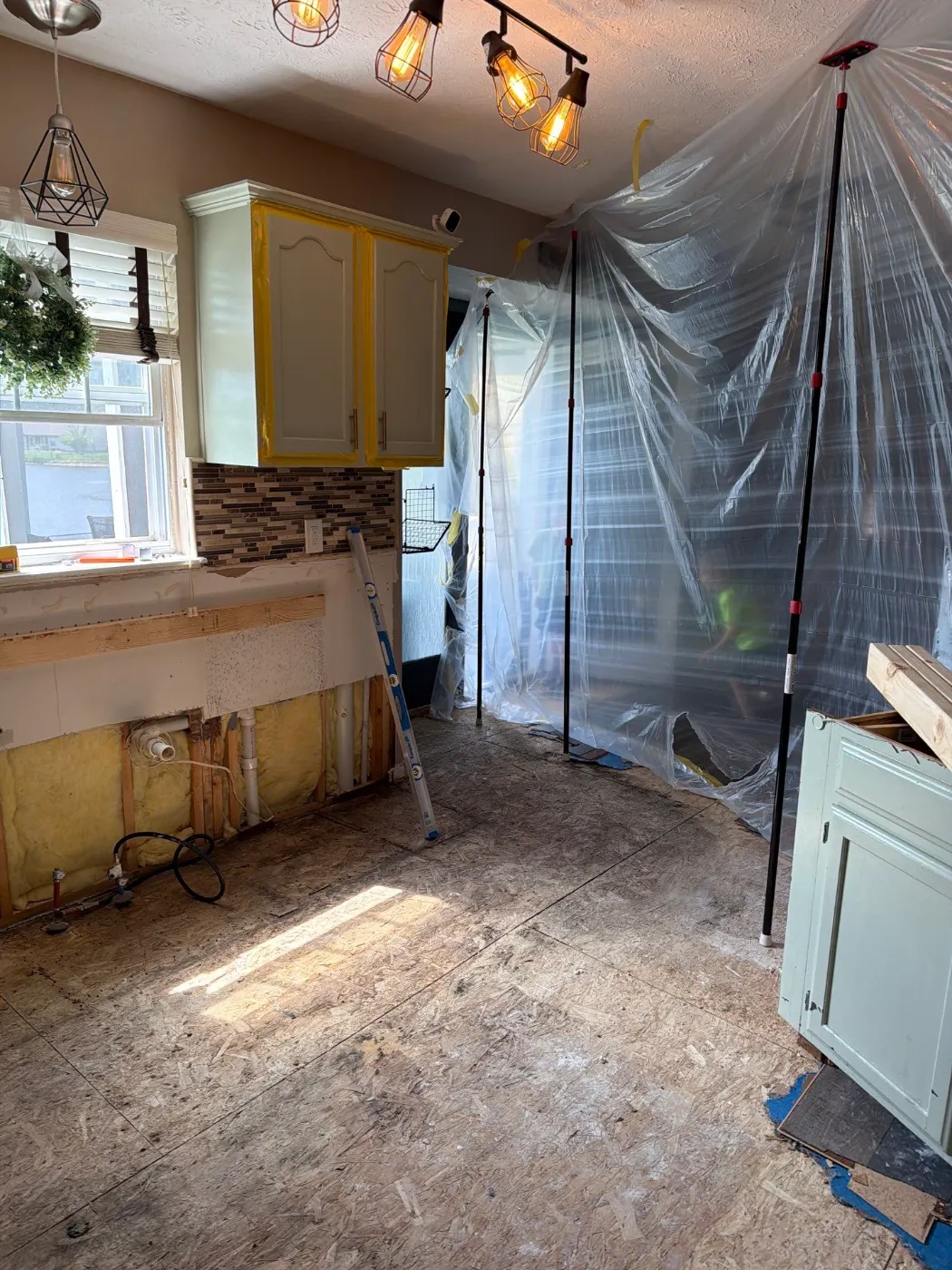
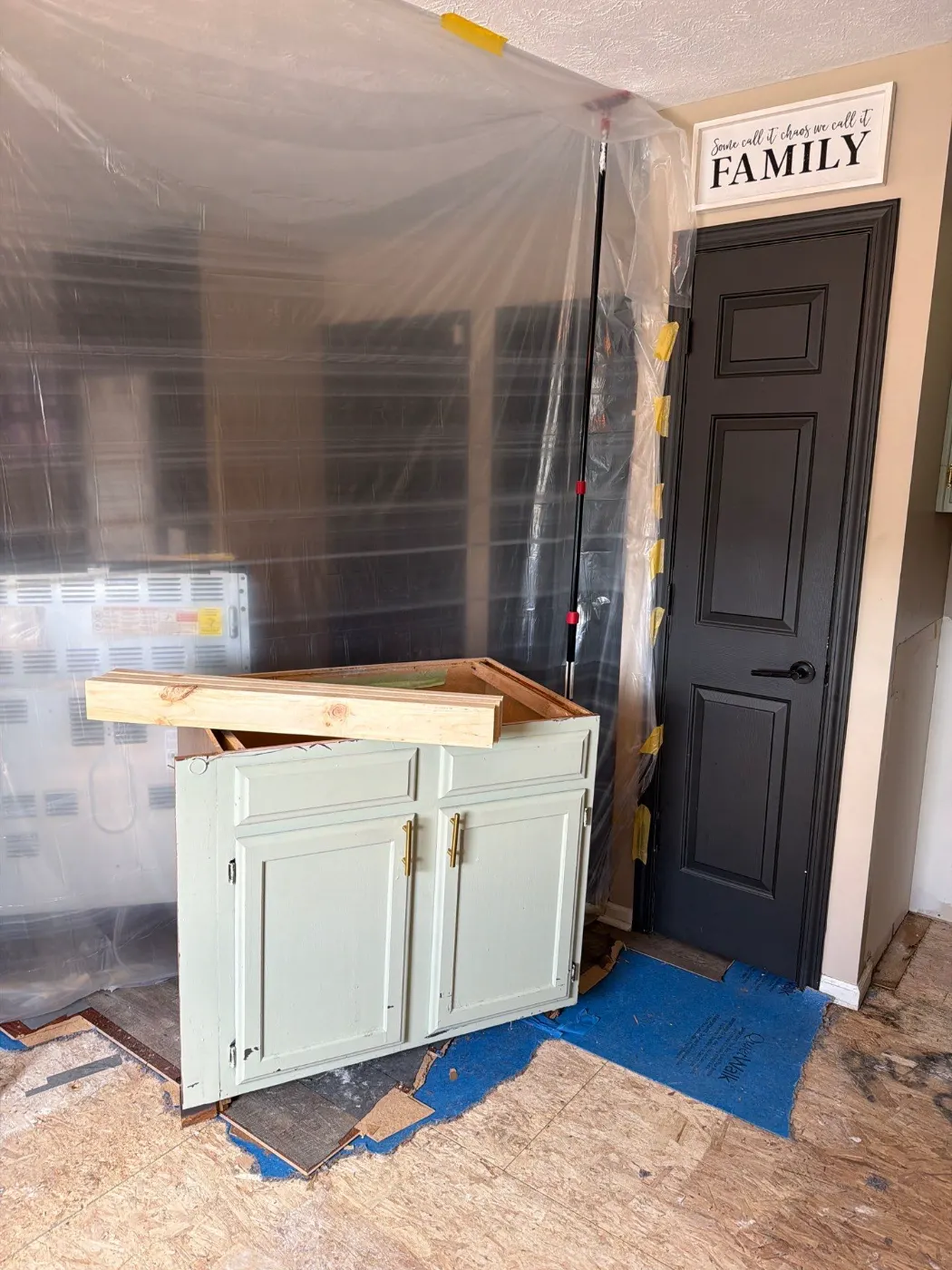
Photographs from real storm damage jobs completed by our crew in Springmill Villages and surrounding areas.
Storm Damage FAQ
Questions Springmill Villages homeowners ask us about storm damage restoration.
Guidance and Standards for Storm Damage
- The National Weather Service office in Indianapolis posts summaries of recent central Indiana storm and flood events. NWS Indianapolis Event Summaries
- The Indiana Department of Insurance advises against permanent repairs before your insurance company inspects the damage. Check your own policy for what it covers. Indiana Department of Insurance: Insurance Claim Tips
Springmill Villages Neighborhoods We Serve
We take storm damage calls in every part of Springmill Villages. Pick your neighborhood for local details.
Other Restoration Services in Springmill Villages
Springmill Villages Water Restoration handles the full scope of restoration work. Explore our other services below.
Water Damage Restoration in Springmill Villages
24/7 emergency response. IICRC certified water restoration from extraction to full dry out.
Learn more →Basement Flooding in Springmill Villages
Basement water emergencies handled fast. Extraction, drying, mold prevention.
Learn more →Sewage Cleanup in Springmill Villages
Category 3 biohazard cleanup. Full containment, decontamination, structural restoration.
Learn more →Request Storm Damage Restoration
Reach Us Directly
Our team is available 24/7 for emergencies and ready to schedule inspections during business hours.
Need Immediate Help?
For active water or mold emergencies, call us directly. We are available 24/7.