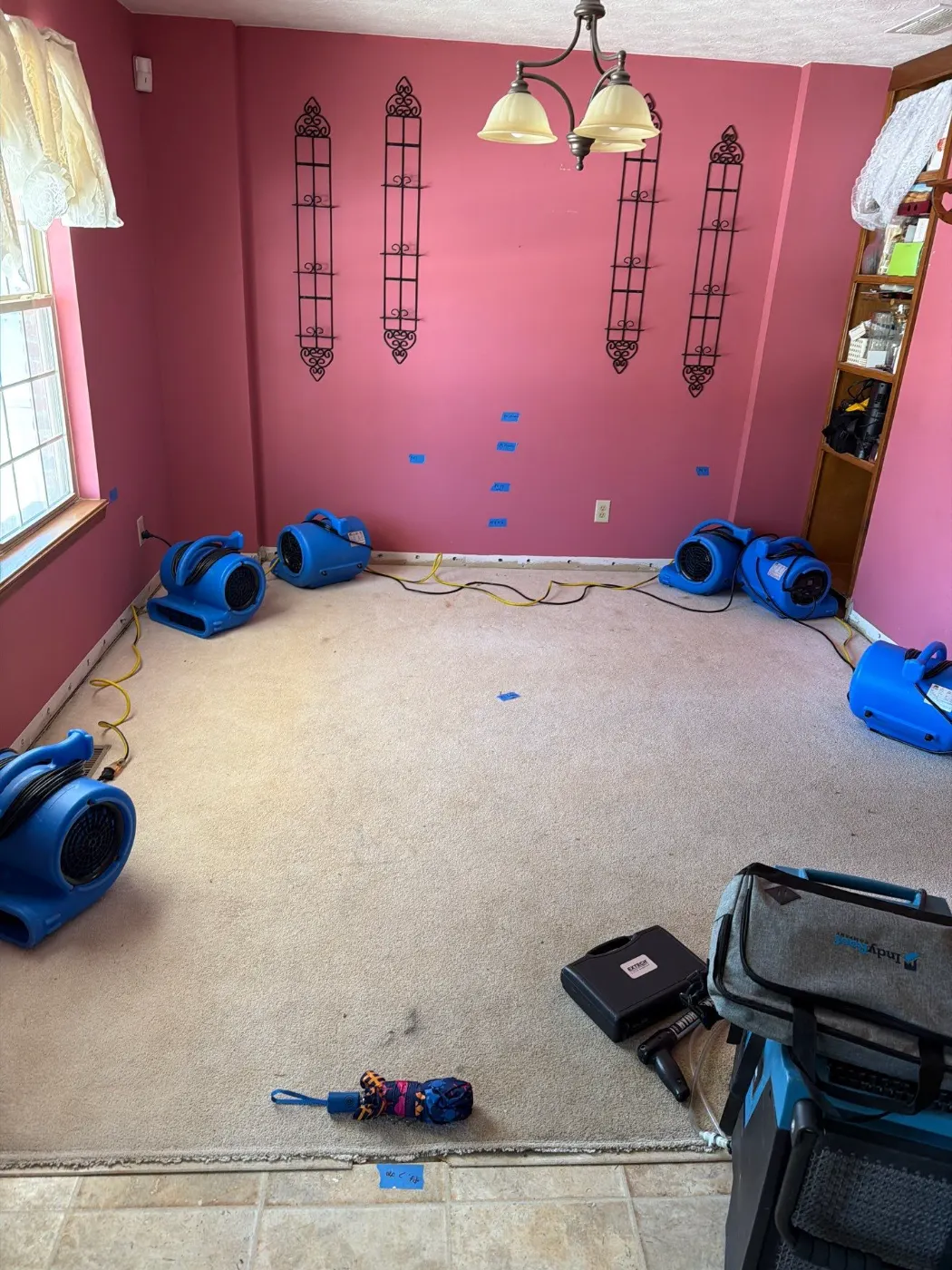
Commercial Mold Remediation in Springmill Villages, IN
Springmill Villages Water Restoration remediates commercial mold and corrects the water feeding it, so the cleaned assembly in Springmill Villages stays clean.
Need Commercial Mold Remediation in Springmill Villages? Springmill Villages Water Restoration schedules certified assessments, delivers written scopes before any work starts, and coordinates with your insurance carrier on approved claims. Call (765) 703-7292.
- Service: Commercial Mold Remediation for Springmill Villages homeowners
- Service area: Springmill Villages, IN and surrounding areas
- Response time: Assessments scheduled promptly, most within one business day
- Licensed and insured (License #RC21100059)
- Serving Springmill Villages, IN since 2018
Commercial Mold Remediation for Springmill Villages Businesses
An industrial hygienist report lands on your desk with a recommended scope, and now you need somebody who can execute it. Springmill Villages Water Restoration works from third party protocols on Springmill Villages commercial jobs, builds the containment the protocol calls for, runs negative pressure with HEPA filtration, and leaves the clearance decision to the hygienist who wrote it, so the party checking the work is separate from the party doing it.
A cavity doesn't get released for rebuilding until the repair that feeds it has been confirmed. When a plumber or an HVAC technician corrects the source of the water on your Springmill Villages job, Springmill Villages Water Restoration documents what was fixed and takes fresh readings after the system has run under normal conditions. The wall closes only when those readings stay dry.
Tenants get notice before the crew shows up. Springmill Villages Water Restoration tells building management what the containment will look like, which corridors and restrooms are affected, how long the equipment will run, and what the noise and access situation will be. Property managers generally want something they can forward to tenants without rewriting it, so the team provides that in writing. Clear notice up front keeps tenant questions manageable while the work runs.
Springmill Villages Water Restoration prepares a complete documentation package for your file. That means dated moisture readings by location, photographs of containment and of every affected assembly, the written remediation scope with the reason each material is coming out, disposal records and the independent hygienist's reports where one was engaged. You and your broker decide how to use it with your carrier.
Before anyone paints over the stain or swaps the ceiling tile and moves on, call Springmill Villages Water Restoration. Covering the surface leaves the damp material and the water behind it in place. An inspection of your Springmill Villages property finds out what's under the finish before another coat or another tile goes up.
Signs You Need Commercial Mold Remediation
If you notice any of these in your Springmill Villages building, schedule a free inspection before the issue worsens.
Window perimeter staining that darkens after driving rain and never dries out completely
Cove base pulling away from the wall with dark residue on the back of it
Laminate or wood flooring that cups or buckles in a ground floor retail space
Duct insulation in the plenum that's sagging, separating or falling away from the metal
Cabinet bases in a break room that have swollen or delaminated around a sink supply line
Ceiling tiles bowing in the middle of the span after a week of heavy rain
A leak behind a refrigerated case or ice machine that discolored the wall base
Tenant improvement work that stops because a contractor found dark staining inside a wall
Mechanical room floor drains that hold standing water for days after a rain
Growth coming back in the same spot within a few months of somebody cleaning it off
How Springmill Villages Water Restoration Handles Commercial Mold Remediation
We follow these steps in order on every Springmill Villages job.
Stopping Active Water
If water is still arriving, stopping it comes before anything else. The crew works with the building engineer to find the valve or penetration involved, then controls it temporarily so the area stops getting wetter while the scope is written.
HEPA Cleaning and Detailing
Every surface inside the enclosure gets HEPA vacuumed and wiped, including framing cavities, structural steel, concrete and the floor. Nonporous materials that stayed in place get cleaned and kept. Air scrubbers keep running through this phase and after it.
Structural Drying
Dehumidifiers and air movers go inside the containment to dry remaining framing and substrate. A technician logs moisture content daily at marked locations. Equipment stays until the readings match unaffected areas of the same building, so nothing gets closed over damp material.
Source Correction and Rebuild
The moisture source gets corrected or assigned in writing to the mechanical or roofing contractor responsible for it. Once drying readings hold, Springmill Villages Water Restoration rebuilds what came out: framing repairs, insulation, gypsum board, ceiling grid, flooring and finishes.
Final Walkthrough and Records
Building management and the team walk the finished space together, and the project file is handed over. That file holds the scope, the daily logs, the disposal records and any verification reports.
Commercial Mold Remediation in Springmill Villages
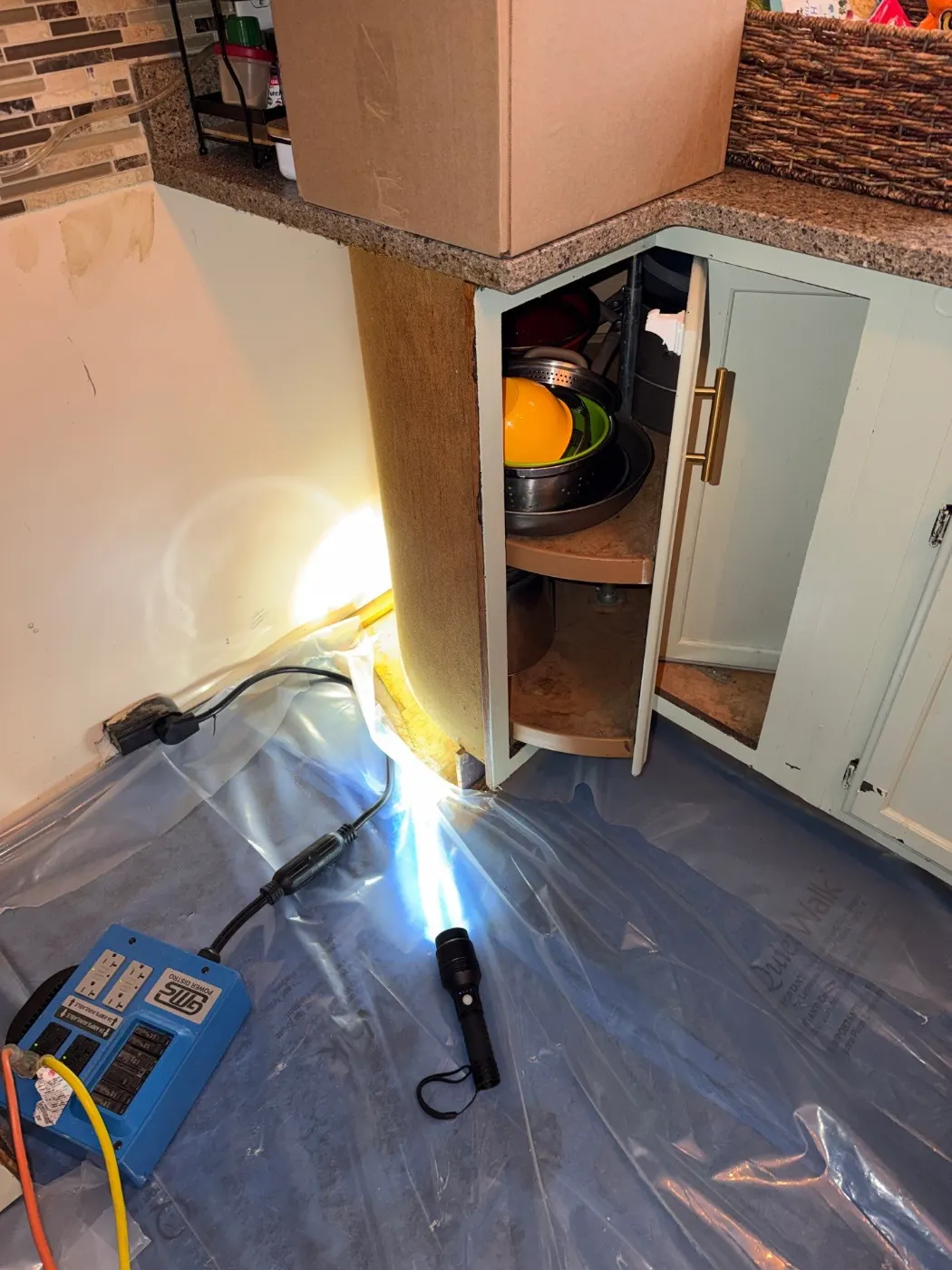
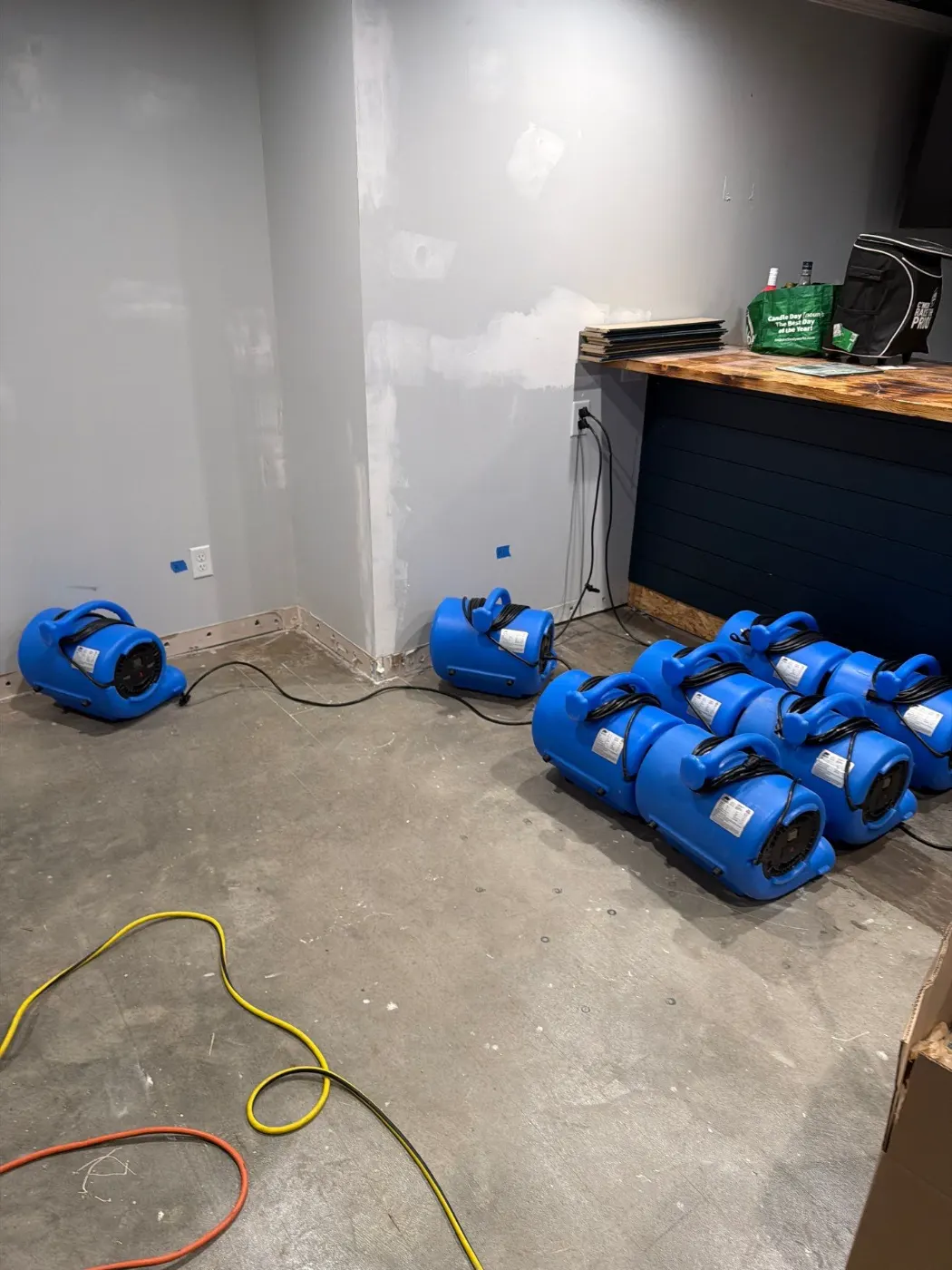
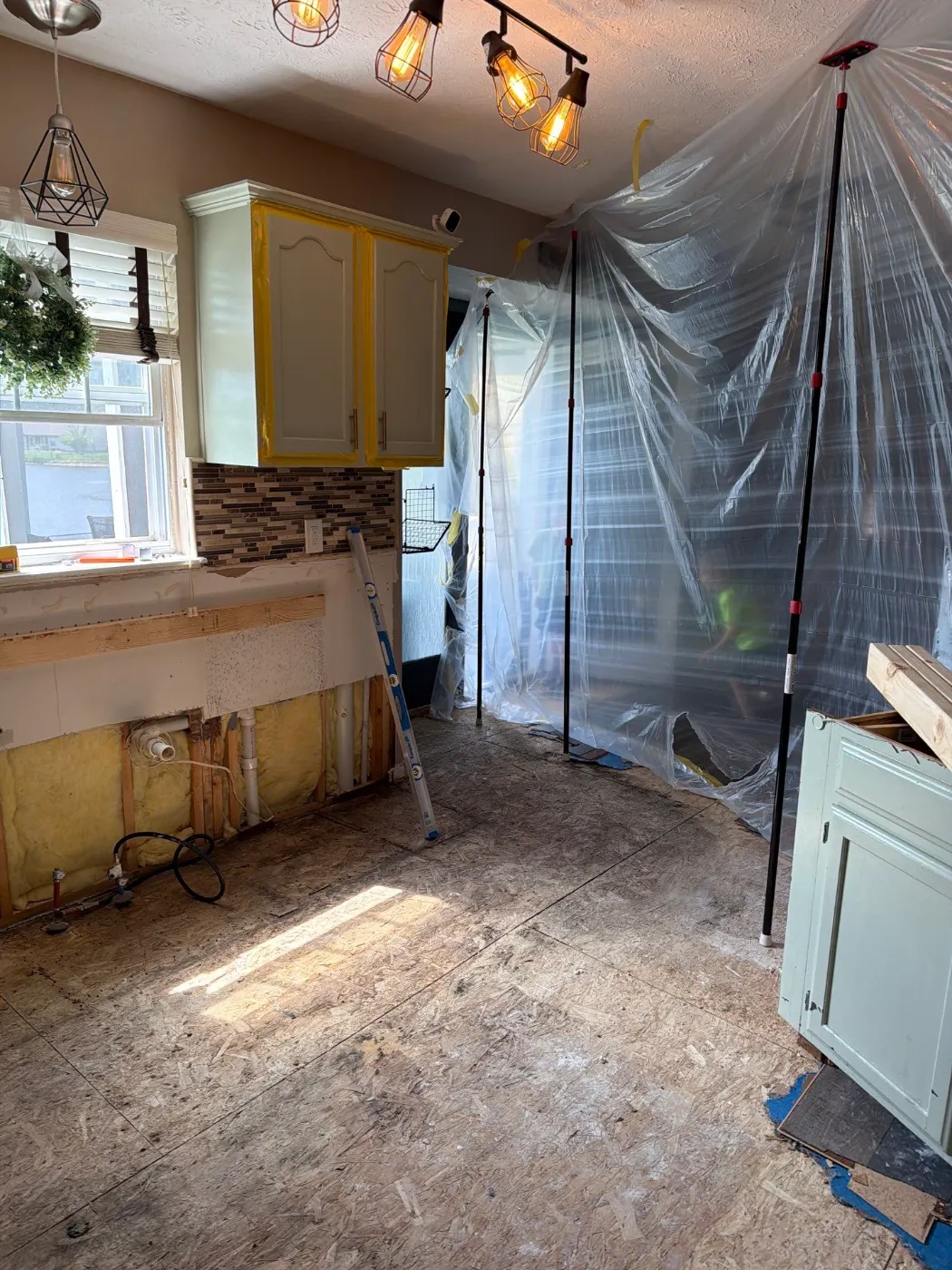
Photographs from real commercial mold remediation jobs completed by our crew in Springmill Villages and surrounding areas.
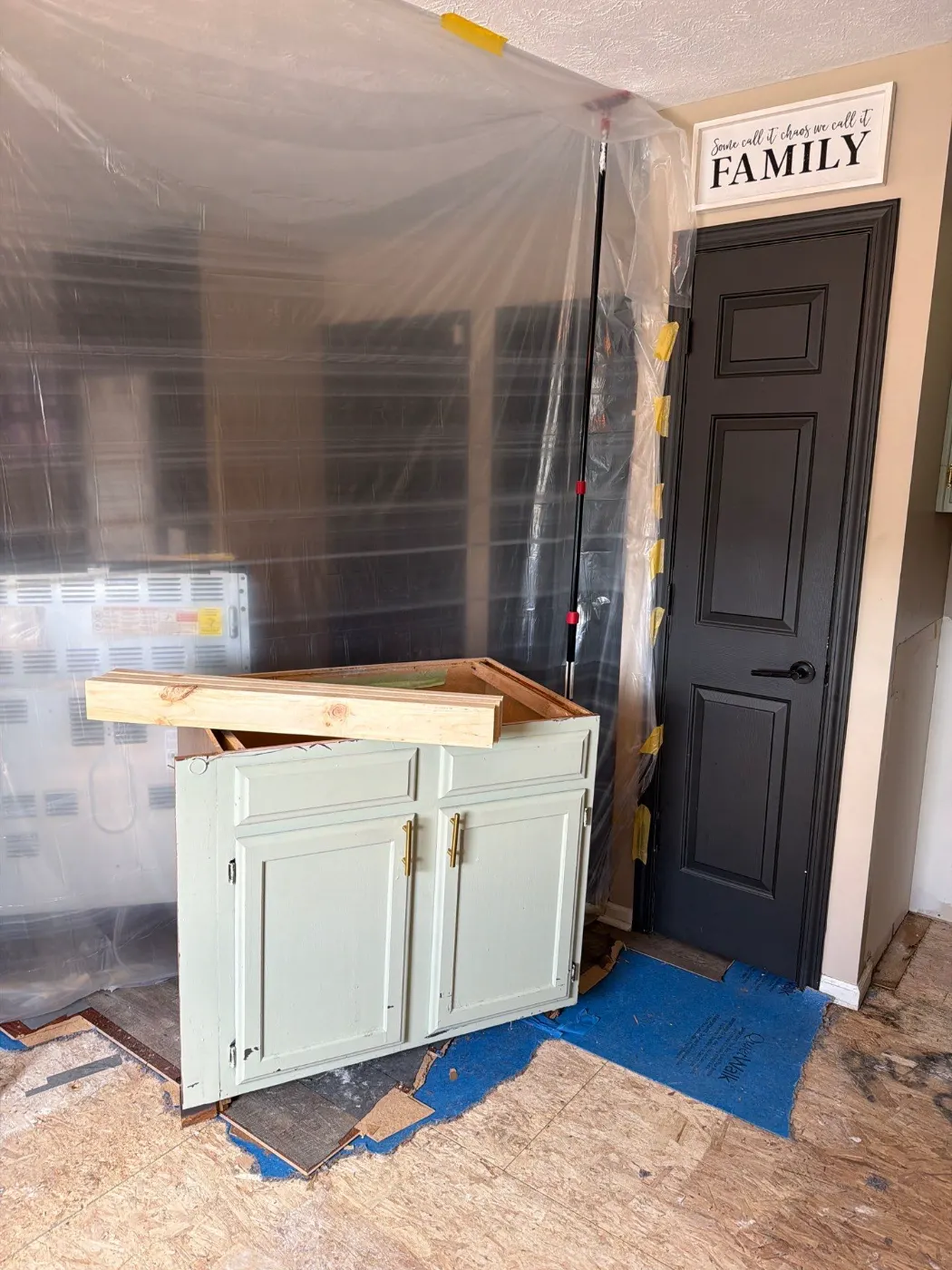
Commercial Mold Remediation FAQ
Questions Springmill Villages property managers ask us about commercial mold remediation.
Guidance and Standards for Commercial Mold Remediation
- The ANSI/IICRC S520 is the published standard for professional mold remediation. The current edition is the Fourth Edition, 2024. IICRC S520 Standard
- EPA’s mold guide says the key to mold control is moisture control. EPA: A Brief Guide to Mold, Moisture and Your Home
Springmill Villages Neighborhoods We Serve
We take commercial mold remediation calls in every part of Springmill Villages. Pick your neighborhood for local details.
Other Restoration Services in Springmill Villages
Springmill Villages Water Restoration handles the full scope of restoration work. Explore our other services below.
Water Damage Restoration in Springmill Villages
24/7 emergency response. IICRC certified water restoration from extraction to full dry out.
Learn more →Basement Flooding in Springmill Villages
Basement water emergencies handled fast. Extraction, drying, mold prevention.
Learn more →Sewage Cleanup in Springmill Villages
Category 3 biohazard cleanup. Full containment, decontamination, structural restoration.
Learn more →Request Commercial Mold Remediation
Reach Us Directly
Our team is available 24/7 for emergencies and ready to schedule inspections during business hours.
Need Immediate Help?
For active water or mold emergencies, call us directly. We are available 24/7.